
Table of Contents
- Understanding Seller Motivation and Market Position
- How to Avoid Overpaying for High-End Properties
- Building Rapport With Listing Agents and Maintaining Professional Detachment
- Real Estate Negotiation Scripts for Buyers
- Luxury Home Inspection Contingencies and Repair Credits
- Privacy, NDAs, and Closing Timelines in Luxury Transactions
- Negotiating High Value Luxury Homes: Final Steps to Closing
Last Updated: August 28, 2026
Understanding Seller Motivation and Market Position
Every seller of ultra-luxury properties has unique motivations, some prioritize certainty over maximum price, others want privacy or a quick transaction. Uncovering these motivations gives you a significant negotiating edge.
Research the property’s history before making an offer. How long has it been listed? Has the price dropped? Comparable sales reveal whether the seller is under pressure or comfortable waiting. Listen carefully during showings, the language listing agents use reveals what the seller values. Professional detachment matters: don’t let emotional attachment cloud your judgment about the seller’s actual position.
How to Avoid Overpaying for High-End Properties
Overpaying happens when buyers fall in love first and analyze second. Flip this sequence: analyze first, then decide if the property justifies your emotional investment.
Start with comparable sales data. Work with an agent who has access to closed sales in the same neighborhood, price range, and with similar features. Recent comps are your baseline for realistic valuation.
Custom amenities create valuation problems. A wine cellar costs $50,000 to build but might only add $25,000 to resale value, that gap is your risk. Inspection contingencies protect you against hidden costs. Ultra-luxury homes have complex systems: smart home integration, high-end HVAC, custom pools with automation (nahb.org). Budget for specialized inspections covering the specific systems in this property. If inspection reveals $100,000 in needed repairs, you have leverage to renegotiate.
Market timing affects pricing. In a seller’s market, luxury properties appreciate quickly. In a buyer’s market, even luxury inventory sits longer. Ask your agent about price reduction history, a home that dropped from $3.5 million to $2.8 million signals a seller under pressure and gives you negotiating room.
Building Rapport With Listing Agents and Maintaining Professional Detachment

The listing agent controls information flow and knows the seller’s bottom line, timeline, and priorities. Professionalism starts with responsiveness: return calls quickly, show up on time, and ask specific questions. "Is the seller relocating for work, or is this a lifestyle change?" shows you’re serious.
Transparency builds trust. If you’re a cash buyer, say so early. If you need financing, be clear about your approval status. Never let the listing agent sense desperation, if your body language signals you’ll pay almost anything, you’ve lost negotiating power. Treat the listing agent as your information source and pathway to the seller, not your adversary.
Real Estate Negotiation Scripts for Buyers
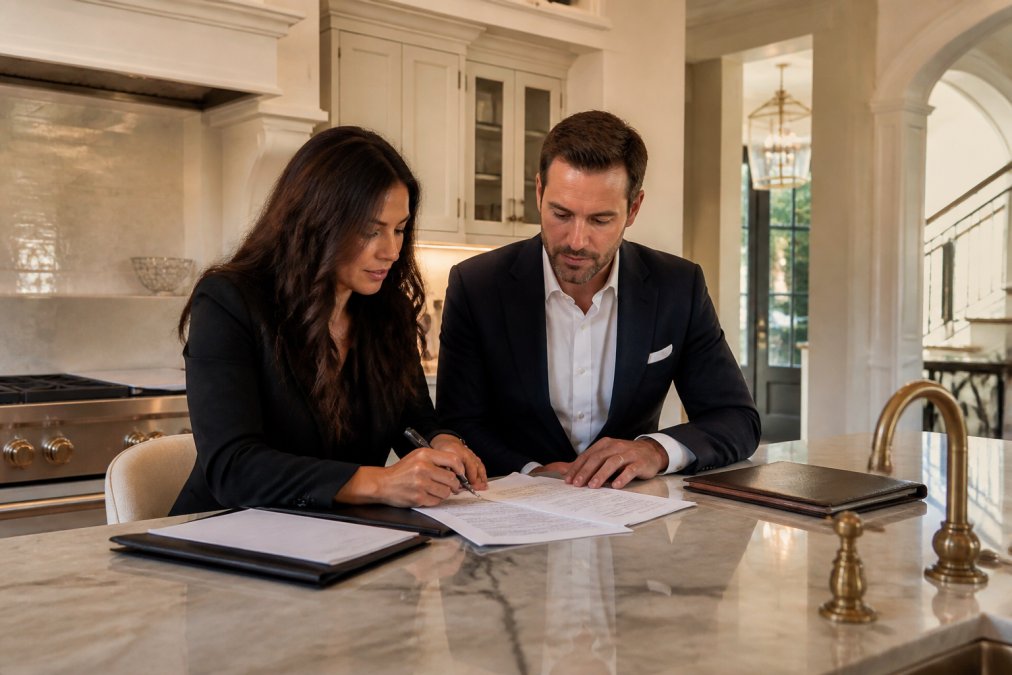
Opening the conversation:
"We’re very interested in this property. Before we submit an offer, I’d like to understand the seller’s timeline and priorities. Are they flexible on closing date? Is price the primary concern, or are there other factors that matter to them?"
When the asking price seems high:
"We love the property, and we’ve done a thorough market analysis. Recent comparable sales in this neighborhood averaged $X for properties with similar features. Help us understand what justifies this premium."
When you need repair concessions:
"Our inspection identified $75,000 in needed work on the HVAC and pool systems. Would the seller prefer we credit that amount at closing, or would they want to handle the repairs before we close?"
When the seller pushes back:
"Our offer reflects fair market value for this property in this market. We’re prepared to move forward quickly with a strong earnest money deposit and a 30-day closing. If the seller has concerns, we’re open to discussion about what would make this work."
When you need to walk away:
"We appreciate the seller’s time, but we’re not able to bridge the gap on price. This property is wonderful, but it’s not worth the premium we’d be paying."
Luxury Home Inspection Contingencies and Repair Credits
Standard home inspections often miss critical systems in ultra-luxury homes. A smart home system or custom pool automation may have significant value that a standard inspector won’t assess. Budget for specialized inspections: general structure, electrical, plumbing, HVAC, pool systems, smart home technology, and roof. For historic luxury homes, add a structural engineer.
When inspection reveals issues, you have three options: ask the seller to credit you at closing, ask them to repair before closing, or accept the property as-is. Most luxury sellers prefer credits, they don’t want contractors in their home before closing.
When requesting repair credits, be specific. Instead of asking for $100,000 in "miscellaneous repairs," say "The HVAC system needs a $40,000 replacement, the pool automation needs $25,000 in upgrades, and the roof needs $35,000 in repairs." Document your estimates with contractor bids.
| Issue Type | Your Approach | Seller Response | Likely Outcome |
|---|---|---|---|
| Minor repairs (<$10K) | Request credit | Often accepts | Accepted |
| Moderate repairs ($10-50K) | Request credit with bids | May negotiate | Partial credit |
| Major repairs (>$50K) | Request credit or price reduction | Likely counters | Split the difference |
| System replacements | Request credit; offer to manage | Often accepts | Credit accepted |
Privacy, NDAs, and Closing Timelines in Luxury Transactions
Privacy is often the hidden priority in ultra-luxury sales. Non-Disclosure Agreements are common and typically prohibit disclosing the property’s price, features, or even that it’s for sale. Violating an NDA can result in legal action and significant financial penalties (sos.ca.gov).
Closing timelines matter more in luxury transactions. Some sellers need certainty and want to close in 30 days; others need 60 or 90 days. Your flexibility on timeline can be valuable. If you’re a cash buyer with a fast closing timeline, lead with that, "We can close in 30 days, all cash, no contingencies" is powerful. If you need a longer timeline, ask for it early and build it into your offer.
International buyers face additional complexity with FIRPTA (Foreign Investment in Real Property Tax Act) requirements and currency conversion (irs.gov). Factor these into your timeline and communicate clearly to the seller. For complex transactions, trusts, probate, or international purchases, involve legal counsel early.
Negotiating High Value Luxury Homes: Final Steps to Closing
Title issues are more common in luxury properties with long ownership histories or complex trusts. Your title company should conduct a thorough search and address issues early.
Appraisals can be problematic for luxury properties because appraisers struggle with custom homes lacking comparables. If the appraisal comes in below your offer price, anticipate this risk early and discuss appraisal contingencies with your lender before making an offer.
Final walkthrough is critical. Verify that the seller hasn’t removed fixtures, caused damage, or failed to complete agreed-upon repairs. Check that custom lighting, smart home systems, and built-in features remain in place. Document everything, photos, written agreements, and inspection reports protect you after closing.
Will Flannigan Real Estate understands that luxury transactions require more than standard real estate knowledge. With nearly 20 years in the Burbank Rancho neighborhood and a background as a former attorney, we guide clients through the complex negotiation process with steady expertise and a fiduciary focus. The difference between overpaying and negotiating successfully comes down to preparation, patience, and professional discipline. Let data guide your strategy, build relationships with agents who control information, and structure contingencies to protect yourself. Get started with a consultation and discover how expert guidance makes the difference when stakes are highest.
Frequently Asked Questions
How much room for negotiation is there on a luxury home?
Luxury properties typically allow more negotiation flexibility than standard homes, especially when comparable sales data is limited or the property has unique custom amenities. Asking price, condition, market timing, and seller motivation all influence negotiating power. Your agent's analysis of comparable sales and understanding of the seller's timeline determines realistic negotiation ranges.
What are the most common mistakes when negotiating high-end property?
Revealing your maximum budget, showing excessive emotion about the property, and making weak opening offers undermine your position. Failing to conduct thorough due diligence on comparable sales and the property's condition limits your negotiating power. Pushing too hard on minor issues while ignoring major structural concerns wastes leverage. Ignoring inspection contingencies or closing timeline flexibility costs you negotiating opportunities. Finally, bypassing professional representation or legal counsel in complex transactions creates unnecessary risk.
What should you never disclose during a luxury home negotiation?
Never reveal your maximum offer, your emotional attachment to the property, your timeline pressure, or your financial situation. Avoid disclosing competing offers or your true motivation for buying. Don't mention that you're relocating due to job stress or family circumstances, sellers use personal information as leverage. Keep private any information about your financing contingencies or repair budgets. Maintaining confidentiality protects your negotiating position and prevents the listing agent from using your information against you in counteroffers.
How do contingencies differ in high-value real estate transactions?
Luxury home contingencies are often more complex and negotiable than standard transactions. Inspection contingencies may include specialized assessments (structural engineering, environmental testing, pool/spa inspections) that take longer and cost more. Appraisal contingencies carry higher risk when properties are unique or newly renovated. Clean offers with minimal contingencies are more competitive but expose you to greater risk. Negotiating the scope, timeline, and repair credit thresholds for contingencies is critical in luxury deals where defect remediation costs can be substantial.
This article was written using GrandRanker