
Table of Contents
- Understanding Selling Trust Property in Los Angeles
- Trustee Duties When Selling Trust Property in California
- Probate vs. Trust Sale in Los Angeles Real Estate
- Essential Documents: Certification of Trust in California
- Capital Gains Tax and Trust Property in California
- Preparing Your Property and Handling Existing Mortgages
- Marketing and Selling Your Trust Property: Disclosure and Escrow
- Common Mistakes to Avoid When Selling Trust Property
Last Updated: July 27, 2026
Understanding Selling Trust Property in Los Angeles
Selling trust property in Los Angeles presents unique legal and financial challenges that differ significantly from standard residential real estate transactions. At Will Flannigan Real Estate, we guide trustees through the complexities of trust sales, which require understanding California Probate Code requirements, fiduciary duties, and local market dynamics specific to the Greater Los Angeles area.
Trust sales involve more than listing a property and waiting for offers. The successor trustee bears legal responsibility for maximizing value for beneficiaries while adhering to strict compliance requirements. Understanding these requirements upfront prevents costly mistakes and protects you legally.
What Makes a Trust Sale Different
A trust sale differs fundamentally from a traditional home sale because the trustee acts in a fiduciary capacity rather than as the property owner. Your primary obligation is to the beneficiaries, not to closing quickly or maximizing personal benefit.
The trust instrument specifies whether the trustee needs unanimous consent from beneficiaries before selling. Some trusts grant broad authority to sell without approval; others require agreement from all beneficiaries or the court. A Certification of Trust can prove your authority to sell without revealing the entire trust document to third parties like title companies and escrow.
Why Local Knowledge Matters in LA Real Estate
Los Angeles real estate markets vary dramatically by neighborhood. Property values in Burbank Rancho differ significantly from Hollywood Hills or San Marino, and local market conditions affect your sale strategy. Research from California Association of Realtors shows that local market expertise directly impacts final sale price and closing timeline. Trust sales in Los Angeles also interact with specific county requirements, Proposition 19 considerations for property tax reassessment, and unique disclosure rules for probate and trust transactions.
Trustee Duties When Selling Trust Property in California
Your role as successor trustee carries significant legal weight under California law. The trustee must act in the best interest of beneficiaries, maintain transparency, and follow the trust instrument precisely.
Your Fiduciary Responsibility to Beneficiaries
A fiduciary duty means you must prioritize beneficiary interests above all else. You cannot accept below-market offers to close faster or make decisions that benefit you personally at the expense of the trust. Document every significant decision with written notes explaining your reasoning. This documentation protects you if beneficiaries later question your choices.
Notifying Beneficiaries and Managing Consent
California Probate Code requires trustees to notify beneficiaries of material actions affecting the trust. Selling trust property qualifies as material. Beneficiaries must receive notice before you accept an offer, not after signing a purchase agreement.
Some trusts require unanimous beneficiary consent before selling. Others allow the trustee to act independently. Review your trust instrument carefully to determine what consent you need. If multiple beneficiaries exist and consent is required, address disagreements early through family meetings or mediation rather than letting them escalate during the sales process.
| Action | Timing | Documentation |
|---|---|---|
| Review trust instrument | Before listing | Keep copy with notes on trustee authority |
| Notify beneficiaries | Before accepting offer | Send formal written notice, keep proof of delivery |
| Obtain consent if required | Before signing purchase agreement | Collect written signatures or notarized agreements |
| Report sale to beneficiaries | Within 30 days of closing | Provide accounting of proceeds and distributions |
Probate vs. Trust Sale in Los Angeles Real Estate
Understanding the difference between probate and trust sales clarifies why trust administration can be simpler in many cases.
Key Differences in Timeline and Process
A probate sale in California requires court involvement, which typically takes 9-18 months. The executor must file documents with the probate court, wait for a hearing, and obtain court confirmation before selling the property.
A trust sale avoids probate court entirely. If the property was properly titled in the trust during the settlor’s lifetime, the successor trustee can sell without court approval. This typically takes 60-90 days from listing to closing, significantly faster than probate.
Legal Requirements Specific to Trust Sales
Trust sales require specific disclosures and documentation that probate sales might not. The Transfer Disclosure Statement (TDS) applies to most California residential property sales, but trust sales may have different requirements depending on whether the trustee is acting in a professional capacity.
Many trust sales qualify for TDS exemptions if the trustee is a family member or the property has been owned for less than one year before death. Verify your specific situation with a real estate attorney to avoid unnecessary disclosures that could delay closing.
Essential Documents: Certification of Trust in California
A Certification of Trust proves your authority to sell the property without revealing the entire trust document. This document is critical for trust sales and prevents title companies and escrow from requesting the full trust instrument.
When and How to Obtain Your Certification
California Probate Code Section 13100 allows trustees to obtain a Certification of Trust from an attorney. This one-page document certifies that the trust exists, that you are the authorized trustee, and that the trust grants you authority to sell real property. The cost is typically between $200-$500, and the document is essential for the sale process.
Using the Trust Instrument and Trustee Authority
Your trust instrument is the governing document that specifies what you can and cannot do as trustee. Before listing the property, review the relevant sections about real estate sales. If your trust document is unclear about your authority, consult with a probate attorney before proceeding.
If your trust document requires court confirmation for property sales, you cannot proceed with a simple trust sale. You’ll need to file a petition with probate court, which extends the timeline significantly. Identify this requirement early.
Capital Gains Tax and Trust Property in California
Tax implications for beneficiaries are often overlooked in trust sales, yet they can significantly impact how much each beneficiary receives from the sale.
Step-Up in Basis and Tax Implications for Beneficiaries
When property passes through a trust at the settlor’s death, beneficiaries receive a "step-up in basis." This means the property’s tax basis resets to its fair market value on the date of death, not the original purchase price. This step-up can eliminate or dramatically reduce capital gains tax on the sale.
For example, if the settlor purchased a Los Angeles home for $300,000 and it’s worth $800,000 at death, the beneficiary’s basis becomes $800,000. If the trustee sells it for $820,000 shortly after, the capital gain is only $20,000 instead of $520,000. Delaying the sale beyond a few months after death can reduce the step-up benefit if property values decline.
Working with a Tax Advisor on Your Sale
Consult a tax advisor before closing on the sale to understand the tax impact for each beneficiary. The trustee’s role is not to minimize taxes, but to provide accurate information about the sale proceeds and basis adjustments. Document the property’s fair market value on the date of death, as this becomes the basis for tax calculations.
Preparing Your Property and Handling Existing Mortgages
Before listing, address any physical issues with the property and clarify the mortgage situation.
Property Inspection and Appraisal Requirements
Schedule a professional home inspection before listing. This identifies major issues that will surface during buyer inspections anyway. Addressing these upfront either increases the property’s appeal or allows you to price it accurately and disclose issues honestly.
A preliminary appraisal helps you understand the property’s market value and supports your fiduciary duty by confirming you’re pricing the property competitively. If the appraisal comes in significantly lower than your listing price, adjust your strategy rather than waiting for offers that won’t materialize.
Resolving Mortgages and Liens Before Sale
If the property has an outstanding mortgage, the trustee must pay it off from sale proceeds at closing. Contact the lender early to request a payoff statement.
Other liens, property tax liens, judgment liens, HOA liens, must also be resolved at closing. The title company’s preliminary report will identify all liens. Address any issues early; don’t wait until escrow to discover a lien that complicates closing.
The trustee’s job is not to maximize personal benefit, it’s to maximize what reaches beneficiaries after all debts, taxes, and costs are paid. Every decision should be documented with this principle in mind.
Marketing and Selling Your Trust Property: Disclosure and Escrow
Once the property is ready, marketing and disclosure requirements determine how quickly you find a buyer and close the sale.
Transfer Disclosure Statement and Exemptions
California requires sellers to provide a Transfer Disclosure Statement (TDS) disclosing known defects and property condition. However, trust sales may qualify for exemptions. If the trustee is a family member of the deceased settlor, or if the property was in the trust for less than one year before the settlor’s death, certain exemptions may apply.
California Department of Real Estate disclosure requirements clarifies which exemptions apply to your situation. If you don’t qualify for an exemption, provide a complete and honest TDS. Incomplete disclosures can kill a deal or create liability.
Working with Escrow, Title Insurance, and Real Estate Agents
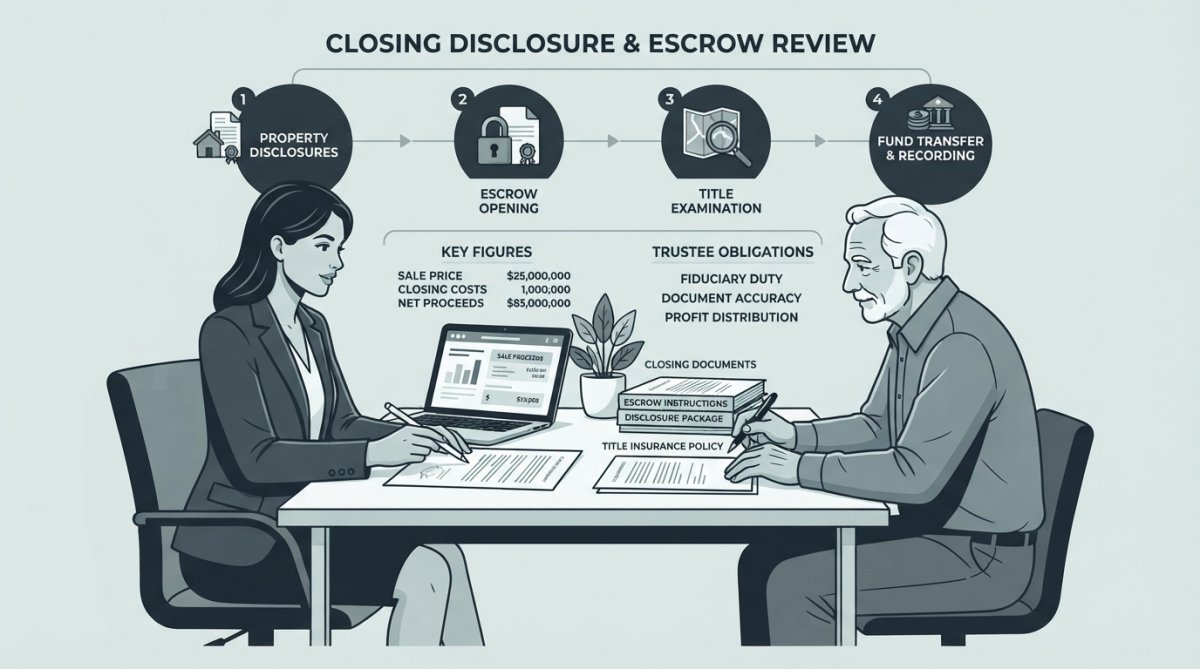
Escrow holds funds and documents during the sale, ensuring both parties meet their obligations. Choose an escrow company experienced with trust sales. They’ll need the Certification of Trust and will coordinate payoff of the mortgage and any liens. Escrow typically takes 30-45 days from acceptance of an offer to closing.
Title insurance protects the buyer and lender against title defects. The title company will conduct a thorough search to identify any issues that could affect the buyer’s ownership. Trust sales sometimes have title issues related to how the property was transferred into the trust. Resolve these early.
A real estate agent familiar with trust sales helps market the property effectively and negotiate offers. The agent should understand that you’re acting as a fiduciary, not as a personal seller. They’ll advise on pricing, timing, and negotiation strategy based on market conditions in your specific Los Angeles neighborhood.
Common Mistakes to Avoid When Selling Trust Property
Trust sales fail when trustees overlook critical steps or misunderstand their fiduciary responsibilities.
Trustee Organization and Conflict Resolution
Disorganized trustees lose documents, miss deadlines, and fail to communicate with beneficiaries. Create a system from day one: keep all trust documents, correspondence, and transaction records in one place. Use a checklist of required steps and timeline expectations.
Conflicts between beneficiaries over the sale price, timing, or property condition are common. Address these early through direct conversation or family mediation. Don’t proceed with the sale if major beneficiaries object; this creates liability for you and resentment among family members.
Rushing the Process and Missing Compliance Steps
The fastest sale isn’t always the best sale for beneficiaries. Rushing to close means missing opportunities to address property issues, properly market the property, or negotiate better terms. A trust sale that takes 90 days is normal; one that closes in 30 days may indicate you’ve skipped important steps.
Common rushing mistakes include accepting below-market offers to close quickly, skipping the home inspection, or failing to notify beneficiaries properly. Document your reasoning for major decisions so you can explain to beneficiaries why you chose that path.
Missing beneficiary notification deadlines or failing to obtain required consents creates legal exposure. Even if the sale closes successfully, beneficiaries can challenge your actions afterward. Compliance takes time, but it protects you and the sale.
| Mistake | Consequence | Prevention |
|---|---|---|
| Skipping Certification of Trust | Title company delays or refusal to close | Obtain certification before listing |
| Failing to notify beneficiaries | Legal challenge to sale, liability for trustee | Send formal notice before accepting offer |
| Accepting first offer without marketing | Below-market sale price, reduced beneficiary proceeds | Market property for 30-60 days minimum |
| Ignoring property defects | Buyer inspection kills deal or forces price reduction | Get home inspection, address major issues |
| Missing mortgage payoff deadline | Delayed closing, escrow complications | Get payoff statement early, monitor deadlines |
Trust sales require patience, organization, and a commitment to acting in beneficiaries’ best interest. The process is more complex than a standard home sale, but following these steps ensures compliance and maximizes the value that reaches the people who depend on the trust proceeds.
Selling trust property in Los Angeles involves navigating California Probate Code requirements, managing fiduciary duties, and understanding local market dynamics. Will Flannigan Real Estate specializes in trust and probate sales throughout Greater Los Angeles, combining deep local knowledge of neighborhoods like Burbank Rancho with a former attorney’s understanding of legal compliance. If you’re facing a trust sale, getting expert guidance from someone who understands both the legal framework and the market prevents costly mistakes. Reach out to discuss your specific situation and explore how specialized trust sale expertise can smooth the process for your family.
Frequently Asked Questions
What is the difference between selling trust property and a probate sale in Los Angeles?
A trust sale bypasses probate court entirely, making it faster and more private. In a probate vs trust sale in Los Angeles, trust properties transfer directly to beneficiaries through the trustee's authority, while probate sales require court approval, public hearings, and extensive documentation. Trust sales typically close in weeks; probate sales take months or years. Both require proper disclosure and title transfer, but trust sales offer greater flexibility in timing and offer acceptance.
What are the main trustee duties California law requires when selling trust property?
Trustee duties California law mandates include acting in beneficiaries' best interests, obtaining fair market value, notifying all beneficiaries of the sale, maintaining detailed records, and managing the sale proceeds properly. You must review the trust instrument carefully, obtain a Certification of Trust, disclose all material property defects, and comply with California Probate Code requirements. You also owe a fiduciary duty to act impartially and avoid conflicts of interest throughout the selling process.
How does capital gains tax affect beneficiaries when selling trust property in California?
Capital gains tax trust property in California may be significantly reduced through the step-up in basis. When property transfers to beneficiaries through a trust at the settlor's death, the property's cost basis is adjusted to its fair market value on the date of death, not the original purchase price. This can eliminate most or all capital gains tax on the sale. However, if the trust is irrevocable or if the sale occurs long after death, tax implications vary. Always consult a tax advisor before selling to understand your specific situation.
What documents do I need to sell trust property, and how do I get a Certification of Trust?
You'll need the original trust instrument, a Certification of Trust in California (a summary document proving trustee authority without revealing trust details), the property deed, title insurance commitment, and a real estate appraisal. To obtain your Certification of Trust, contact your attorney or the trust's original drafter, they can prepare it quickly. You'll also need Transfer Disclosure Statement forms, escrow instructions, and any existing mortgage or lien documentation. Your real estate agent and escrow company can guide you on additional requirements specific to Los Angeles County.