
Table of Contents
- Burbank Rancho Luxury Homes vs Standard Properties: A Quick Comparison
- Price and Market Trends: Median Listing Prices in Burbank Rancho
- Burbank Rancho Neighborhood Specific Plan and Zoning Impact
- Burbank Equestrian Zoning Laws and Their Effect on Property Use
- Luxury Home Amenities in Burbank vs Standard Property Features
- Architectural Styles and Lot Sizes: Ranch vs Traditional
- Resale Value and Appreciation Potential: Which Property Type Wins?
- Frequently Asked Questions
Last Updated: September 13, 2026
Burbank Rancho Luxury Homes vs Standard Properties: A Quick Comparison
The gap between Burbank Rancho luxury homes and standard properties comes down to four things: land, architecture, zoning, and long-term value. This guide from Will Flannigan Real Estate breaks down how each factor shapes price, lifestyle, and resale. In the Rancho District, a single-family residence on a larger lot with equestrian access follows a different set of rules than a standard tract home a few blocks away. Understanding those rules before you buy or sell is the difference between a smart purchase and an expensive lesson.
Burbank Rancho luxury properties typically sit on wider lots, carry distinctive ranch-style architecture, and fall under zoning that permits uses standard homes cannot match. Standard properties trade those advantages for lower entry prices and simpler maintenance. Below, we compare the two across price trends, zoning, amenities, architecture, and appreciation so you can decide which fits your goals.
| Factor | Rancho Luxury Homes | Standard Properties |
|---|---|---|
| Typical lot size | Larger, wider frontage | Smaller, tighter spacing |
| Architecture | Ranch-style, custom facades | Tract-built, uniform |
| Zoning flexibility | Broader use allowances | Standard residential only |
| Equestrian access | Often permitted | Rarely permitted |
| Price positioning | Higher, more variable | Lower, more predictable |
| Best for | Buyers seeking land and character | Buyers seeking simplicity |
Price and Market Trends: Median Listing Prices in Burbank Rancho
Luxury homes in the Rancho District command a premium because buyers are paying for land and architectural character, not just square footage. The median listing price in this pocket runs well above the broader Burbank figure, and the spread widens when a property includes a larger lot or equestrian potential. For current figures, Redfin’s Rancho District housing market data tracks median listing prices and year-over-year movement for the neighborhood.
Market inventory tells the rest of the story. Luxury listings turn over more slowly because the buyer pool is narrower, while standard properties move faster and attract more competition. That means sellers of high-value homes need patience and precise pricing, and buyers need to move quickly on standard homes that are priced right.
Burbank Rancho Neighborhood Specific Plan and Zoning Impact
Most listing pages will tell you a Rancho property is zoned residential and stop there. That is not useful. What actually separates a Rancho luxury parcel from a standard tract home is the combination of a base zone, a specific plan overlay, and the development rights those two layers create or remove. Buyers who skip this step routinely overpay for a lot they cannot build on the way they assumed.
The base zone in most of the Rancho pocket is single-family residential, commonly mapped as R-1 under the city’s zoning code (planning.org). R-1 is restrictive by design: one primary dwelling per lot, minimum lot area and width requirements, front, side, and rear setback minimums, and a height limit that keeps the neighborhood low-slung. A standard Burbank tract home in a typical R-1 subdivision is built to those minimums and nothing more. The lot is sized to the house, not the other way around.
The Rancho District sits under an additional layer, a neighborhood specific plan that functions as an overlay on top of the base zone. A specific plan is a planning document adopted under state planning law that tailors land-use rules to one geographic area (ca.gov). It can loosen some standards and tighten others. In practice, that means two parcels on the same street can carry different allowances for lot splits, accessory structures, second units, and equestrian uses depending on how the specific plan and the underlying zone interact at that address.
Here is the mechanism that matters for value. A lot split, subdividing one parcel into two conforming lots, is only possible if the resulting lots still meet the minimum area, width, and frontage standards the zone and specific plan require. A wide Rancho lot with generous frontage may clear that bar; a standard tract lot almost never does, because it was platted at or near the minimum in the first place. That single difference is why a Rancho parcel can carry a development option a standard property cannot, and why appraisers and buyers price that option into the land.
Setbacks work the same way. A property with deeper side and rear yards can absorb an accessory dwelling unit, a detached office, a pool, or a guest structure without triggering a variance. A standard parcel with tight setbacks often cannot add any of those without a discretionary approval that may or may not be granted. The lot looks similar on a listing photo. The buildable envelope is not.
How to verify this before you write an offer, in order:
- Pull the parcel’s zoning designation and the specific plan from the city’s planning department or online zoning map. Do not rely on the listing agent’s description.
- Read the specific plan’s development standards section for minimum lot area, lot width, setbacks, and any lot-split or subdivision provisions.
- Request the certificate of zoning or a zoning verification letter if you need written confirmation for financing or a build plan.
- Check for any prior variances, conditional use permits, or nonconforming-use status on the parcel, these can be grandfathered and lost.
Pull the specific plan and the parcel’s zoning designation before you write an offer. Two homes on the same street can carry different allowances for additions, lot splits, or accessory structures, and that difference shows up in resale value years later.
The resale consequence is straightforward. A buyer who can legally split, expand, or add a structure is bidding on a different asset than a buyer who is limited to the existing footprint. That optionality is what holds value through a slow market, not the finishes, which can be replicated, but the land rights, which cannot.
Burbank Equestrian Zoning Laws and Their Effect on Property Use
The equestrian character of the Rancho District is the single feature no standard Burbank tract can replicate, and it is also the most misunderstood. “Equestrian zoning” is not a zone. It is a set of permitted uses layered onto certain residential parcels, and it comes with conditions that determine whether you can actually keep a horse, build a stable, or maintain a riding area on a given lot.
How the mechanism typically works: a residential zone may permit the keeping of large animals as an accessory use, subject to standards. Those standards usually include a minimum lot area per animal, a required setback from any dwelling on the property and from neighboring dwellings, and a limit on the number of animals based on lot size. A parcel that meets the minimums can support horses as of right. A parcel that falls short needs a discretionary approval, a conditional use permit or variance, which is not guaranteed and can be conditioned or denied.
That is why two Rancho lots of similar size can have very different equestrian potential. Frontage, depth, and the position of the existing house on the lot all affect whether a stable, corral, or riding area can be sited within the required setbacks. A wide, deep lot with the house set forward can often accommodate a barn and turnout in the rear. A lot with the house centered or pushed back frequently cannot, even if the square footage looks comparable on paper.
For buyers, the verification checklist is short but non-negotiable:
- Confirm the parcel’s current zoning and whether large-animal keeping is a permitted accessory use in that zone.
- Check the specific plan and any neighborhood standards for lot-area-per-animal and setback requirements.
- Ask the city whether the parcel has an active animal-keeping permit or a history of one, and whether any prior permit has lapsed.
- Inspect existing structures, barns, tack rooms, arenas, for permit status. Unpermitted equestrian structures are a common finding and can be a financing problem.
Do not assume a neighboring property’s equestrian use applies to yours. Zoning designations and permitted uses can change parcel by parcel, and a buyer who assumes otherwise may discover the restriction only after closing.
The nonconforming-use trap is the one that costs buyers the most. If a parcel was used for horses before a zoning change and the use has continued without interruption, it may be a legal nonconforming use, protected, but fragile. If the use lapsed for a period defined by local rules, or if the property was redeveloped in a way that eliminated the equestrian structures, the protection can be lost. Reestablishing it usually requires a new discretionary approval, and the standards in effect today may be stricter than the ones the original use was grandfathered under. A buyer who assumes the horses can come back may find they cannot.
Lifestyle and maintenance are the other half of the equation, and this is where the Rancho segment diverges sharply from standard properties. Equestrian use is not a passive amenity. It carries ongoing costs: manure management and disposal, fly and rodent control, footing maintenance for arenas, fencing and barn repair, water use, and liability insurance that standard homeowners policies may not cover without a rider or a separate farm policy. A standard tract home has none of these line items. A Rancho property with active equestrian use has all of them, and they recur every year.
That trade-off is exactly what the right buyer is paying for. For a household that wants horses on site, the alternative is boarding at a facility off-property, which means hauling, scheduling, and losing daily access. For that buyer, the premium on an equestrian-capable Rancho parcel is rational. For a buyer who wants land and character but no animals, the same parcel is a maintenance obligation with no offsetting benefit, and that mismatch is why equestrian-capable properties sit on the market longer than standard homes and why pricing them requires a narrower, more specific buyer pool.
Luxury Home Amenities in Burbank vs Standard Property Features
Luxury home amenities in Burbank Rancho center on space, privacy, and customization. Where standard properties offer efficient, uniform layouts, luxury homes in this neighborhood tend to feature larger footprints, expanded outdoor living areas, and finishes chosen by the original owner rather than a builder’s package. The difference is not just cosmetic. Larger lots support pools, guest structures, and detached workspaces that standard parcels often cannot accommodate.
Standard properties win on predictability. Floor plans are easier to compare, maintenance demands are lower, and renovation costs are more contained. If your priority is a turnkey home with minimal upkeep, a standard property is usually the better fit. If you want room to shape the property over time, the Rancho luxury segment offers more raw material to work with.
| Amenity | Rancho Luxury Homes | Standard Properties |
|---|---|---|
| Outdoor living | Pools, guest structures, patios | Basic yard, small patio |
| Lot flexibility | Room to expand or add | Limited by spacing |
| Finish level | Owner-customized | Builder-standard |
| Maintenance load | Higher | Lower |
| Renovation ceiling | High | Moderate |
Architectural Styles and Lot Sizes: Ranch vs Traditional
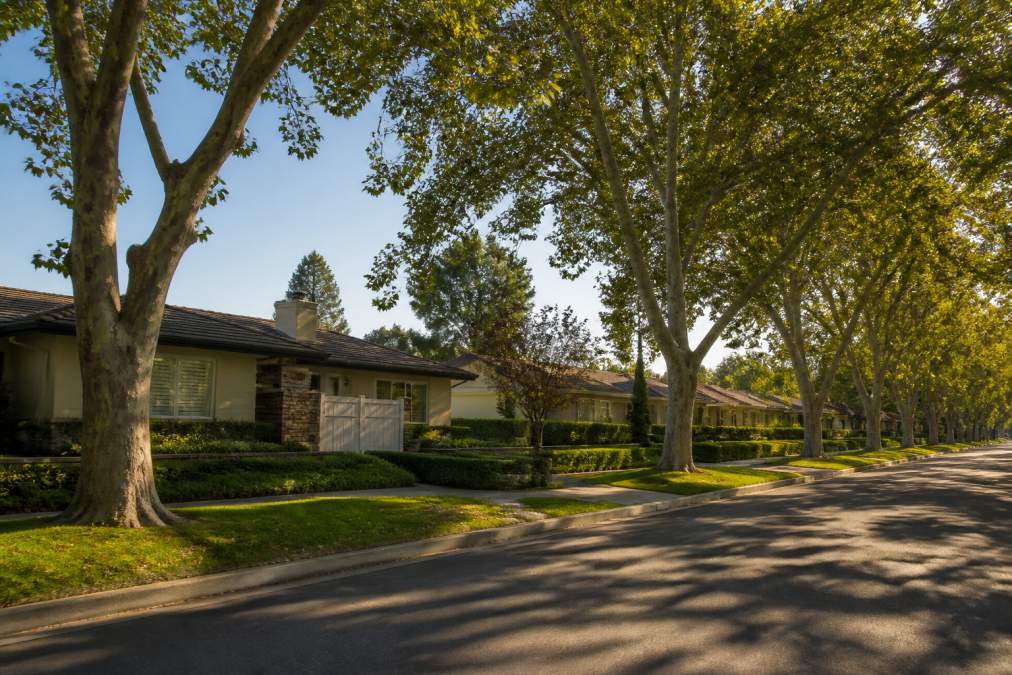
Ranch-style architecture defines much of the Rancho District, and its footprint is the reason lot size matters so much here. Classic ranch homes spread horizontally across a wide lot, which is why property facade, curb appeal, and frontage width carry real weight in valuation. Traditional two-story homes pack more square footage onto a smaller footprint, which suits buyers who prioritize interior space over land.
Lot size drives appreciation in this neighborhood more than interior square footage does. A modest ranch home on a generous lot can outperform a larger traditional home on a tight parcel, because the land itself holds and builds value. Buyers comparing the two should weigh frontage, depth, and setback flexibility alongside the floor plan, since those are the features that cannot be changed later.
Resale Value and Appreciation Potential: Which Property Type Wins?
Rancho luxury properties generally show stronger appreciation potential over time, driven by land scarcity and zoning advantages that cannot be replicated. Standard properties appreciate too, but their upside is capped by the lot and the uniform architecture around them. The premium segment’s appreciation is not guaranteed and depends heavily on condition, timing, and how well the property is positioned in the market.
For sellers, this means presentation and pricing precision matter more in the luxury tier. For buyers, it means the entry price is only part of the calculation. A property with equestrian access, a larger lot, or broader zoning allowances tends to hold value through slower markets better than a standard home with no distinguishing features. Capitalizing on these unique attributes requires a strategic approach to showcase luxury home features that highlights the inherent lifestyle benefits of the Rancho district.
Land and zoning drive long-term value in Burbank Rancho more than interior square footage. A smaller home on a flexible lot often outperforms a larger home on a restricted one.
A former attorney’s eye for contracts, disclosures, and trust or probate requirements can make a meaningful difference when a transaction involves complex ownership. That is the perspective Will Flannigan Real Estate brings to Burbank Rancho sellers and buyers, alongside nearly two decades of residency in the neighborhood and Mandarin-speaking services for families navigating a sale together.
Frequently Asked Questions
What defines a luxury home in the Burbank Rancho neighborhood?
Luxury homes in Burbank Rancho typically feature larger lot sizes, custom ranch-style architecture, upgraded amenities like pools or guest houses, and proximity to equestrian trails. The neighborhood specific plan and zoning regulations often preserve these characteristics, which can affect property valuation. Standard properties usually have smaller footprints and fewer high-end finishes.
How do property values differ between luxury and standard homes in this area?
Luxury homes in Burbank Rancho often command higher median listing prices due to larger lot sizes, architectural character, and equestrian-friendly amenities. Standard properties tend to be more affordable but may still appreciate well because of the neighborhood’s desirability. Market inventory and zoning regulations also play a role in long-term value.
Are there specific zoning regulations for homes in the Burbank Rancho?
Yes, the Burbank Rancho neighborhood specific plan and residential zoning rules govern lot sizes, setbacks, and allowable uses. Burbank equestrian zoning laws may also permit horse-keeping on certain properties, which is uncommon in standard residential zones. These regulations can influence property use and resale value.
What are the primary lifestyle benefits of living in the Burbank Rancho?
Residents enjoy a suburban feel with ranch-style architecture, equestrian-friendly trails, and community amenities. Luxury home amenities in Burbank often include larger yards, pools, and proximity to studios and dining. The neighborhood specific plan helps maintain a consistent architectural character, which many buyers find appealing.
How does the Burbank Rancho neighborhood plan impact property values?
The neighborhood specific plan sets guidelines for land use, density, and design, which can preserve the area’s character and limit overdevelopment. This stability often supports property valuation and appreciation potential. For luxury homes, the plan may protect equestrian zoning and large lot sizes that buyers pay a premium for.
Choosing between a Rancho luxury property and a standard home comes down to what you value: land, zoning flexibility, and character, or predictability and lower upkeep. Will Flannigan Real Estate helps sellers and buyers in Burbank Rancho get this decision right, with a fiduciary mindset, deep local knowledge, and specialist experience in trust and probate sales. Get started with Will Flannigan Real Estate and find out what your property is worth today.