
Table of Contents
- Who Has Authority to Renovate an Inherited House During Probate
- Executor Responsibilities for Estate Property: Repairs, Insurance, and Carrying Costs
- Probate House Repairs: What Can Be Done and What Must Wait
- Inherited House Renovation Checklist: From Cleanout to Contractor
- How to Fund Renovations and Reimburse Heirs From Estate Funds
- Selling a House During Probate: Renovate First or Sell As-Is?
- Conclusion: Protecting the Estate and the Heirs
- Frequently Asked Questions
Last Updated: October 8, 2026
Who Has Authority to Renovate an Inherited House During Probate
When a parent or relative passes and leaves behind a home in Burbank, Glendale, or Pasadena, the inherited house probate question of who can authorize repairs comes up fast.
This guide from Will Flannigan Real Estate covers how families across Los Angeles County handle repairs, carrying costs, and the decision to renovate or sell as-is.
Probate is the court-supervised process of settling a deceased person’s estate, paying debts, and distributing what remains to the rightful heirs.
How California Probate Court Approval Works for Repairs
California probate courts give personal representatives limited power to act without approval. Routine maintenance usually needs no court order. Major repairs, new construction, or anything that changes the property’s character often requires formal approval.
The California Courts self-help guide on probate explains that a personal representative must act in the estate’s best interest. Spending estate money on a renovation that heirs dispute can lead to personal liability.
Step-by-Step: Getting Work Authorized Before Probate Closes
- Confirm the personal representative has been formally appointed by the court
- Check whether the will or trust grants repair authority
- Get written repair estimates from licensed contractors
- Notify all heirs and beneficiaries in writing
- File a petition for court approval if the work is substantial
- Keep every receipt, invoice, and approval letter
- Document the property’s condition before and after work
Starting major work before the court appoints a personal representative can make you personally liable for the cost. If the estate cannot reimburse you, that money is gone.
Executor Responsibilities for Estate Property: Repairs, Insurance, and Carrying Costs
Executor responsibilities for estate property go well beyond signing papers. The person in charge must protect the home’s value while the estate is open.
A vacant home in the Hollywood Hills or La Cañada can lose value fast. California law holds the representative to a fiduciary standard, meaning they must act as a careful owner would.
Key duties include:
- Maintaining homeowner’s insurance on the vacant property
- Paying property taxes to avoid liens
- Keeping utilities on to prevent pipe damage and mold
- Arranging regular inspections or a property manager
Many families find that carrying costs add up quickly during a long probate. A common mistake is letting insurance lapse because the home sits empty.
Probate House Repairs: What Can Be Done and What Must Wait
Probate house repairs fall into two buckets: urgent health and safety fixes, and cosmetic upgrades. The first group protects the asset and the people near it. The second group should wait until you know whether you are selling or keeping the home.
Health and Safety Repairs That Come First
These repairs protect value and prevent liability:
- Fixing a leaking roof or active water intrusion
- Repairing broken stairs, railings, or walkways
- Addressing electrical hazards or exposed wiring
- Clearing hazardous debris or unsafe structures
Cosmetic Work That Should Wait Until You Decide to Sell
Kitchen remodels, new flooring, and fresh paint feel productive. But spending estate money on cosmetic work before you know the sale plan can waste funds. If the eventual buyer wants to remodel anyway, that money disappears.
Focus estate dollars on repairs that prevent further damage or legal risk. Cosmetic upgrades should wait until the selling strategy is clear.
Inherited House Renovation Checklist: From Cleanout to Contractor
An inherited house renovation checklist keeps the process organized and defensible. Start with the cleanout, because you cannot assess repair needs until the home is empty.
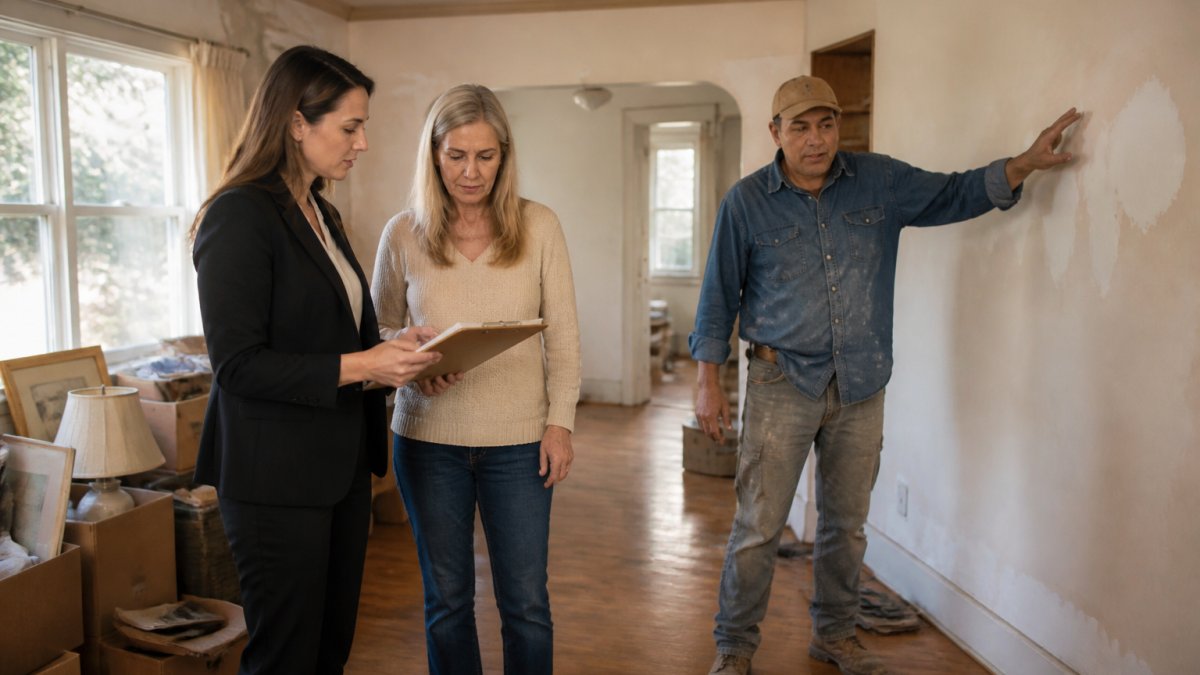
Work through these steps in order:
- Photograph every room before anything is moved
- Divide personal belongings among heirs or donate them
- Get a home inspection to document condition
- Collect written repair estimates from licensed contractors
Permits and contractor safeguards matter here. Unpermitted work in Burbank or Glendale can stall a sale and create disclosure problems later. Always confirm a contractor’s license through the California Contractors State License Board before any work begins.
How to Fund Renovations and Reimburse Heirs From Estate Funds
Funding repairs usually comes from one of three sources: cash already in the estate, a sale of other estate assets, or an heir paying out of pocket with the expectation of reimbursement. The mechanics matter more than the source, because California’s probate process requires every dollar to be traceable in the final accounting filed with the court.
Using Estate Funds the Right Way
The personal representative typically opens a separate estate bank account shortly after appointment. Repair invoices should be paid from that account, never commingled with the representative’s personal funds.
Before authorizing work, confirm the estate actually has liquid funds. A home in Burbank or Glendale may represent most of the estate’s value, and the representative cannot spend money the estate does not have without court approval.
Heir Advances and Reimbursement Agreements
When an heir fronts money for repairs, the arrangement should be documented before any work begins. A common pattern is a short written agreement signed by the personal representative and the advancing heir that states:
- The amount advanced and the date
- What the money will be used for
- That the advance will be repaid from estate funds before distribution
- Whether the advance carries interest (usually it should not, to avoid complicating the estate’s accounting)
Without that agreement, reimbursement can become a dispute. California probate law treats advances as debts of the estate only if they are properly documented. An undocumented payment from an heir often looks like a gift or a voluntary contribution, and the representative may be unable to repay it without court approval.
Handling Unequal Contributions Among Heirs
It is common for one sibling in Studio City or Sherman Oaks to live nearby and manage the repairs while others are out of state. That sibling may end up paying for inspections, lock changes, or emergency repairs out of pocket. The cleanest approach is to treat every advance as a reimbursable estate expense, then equalize at distribution. If the estate cannot reimburse before closing, the final accounting can show the advance as a credit to that heir’s share.
A running log should track:
- Who paid for what
- The date and amount of each expense
- Written approval from the representative
- How the expense benefits the estate as a whole
- Whether the payment was a reimbursement or an advance
What the Court Expects to See
When the final accounting is filed, the court and the heirs will review every repair expense. Receipts, invoices, canceled checks, and the written approval from the representative should all be retained. In larger estates, the representative may need court approval before spending above a certain threshold, so check the Letters of Administration and any court orders for spending limits.
Paying for repairs from a personal account without documentation can delay reimbursement for months and may result in the heir absorbing the cost. Get written approval from the personal representative before spending anything.
A clear paper trail protects everyone. If you are unsure whether a repair qualifies as an estate expense, ask the probate attorney before the work begins, not after the invoice arrives.
Selling a House During Probate: Renovate First or Sell As-Is?
Selling a house during probate often comes down to one question: renovate first or sell as-is? There is no universal answer, but the decision can be made systematically by comparing three numbers: the cost of the work, the carrying costs during the work, and the likely difference in sale price.
A Simple Decision Framework
Start with a written repair estimate from a licensed contractor. Then estimate how long the work will take. Then calculate the carrying costs the estate will pay during that period, property taxes, vacant-home insurance, utilities, and any loan payments.
If the projected increase in sale price is greater than the repair cost plus carrying costs plus the additional commission on the higher price, the renovation may be worth it.
Why Los Angeles County Carrying Costs Matter
In Burbank, Glendale, and Pasadena, carrying costs during a renovation can add up faster than heirs expect. Property taxes continue, vacant-home insurance is more expensive than standard coverage, and utilities must stay on to prevent mold and pipe damage.
Heirs in San Marino and La Cañada sometimes assume a full remodel will pay off because the neighborhood supports high sale prices. In practice, the return depends on the buyer pool.
How Renovations Affect the Sale of a Probate Property
Renovations can raise the sale price, but they also add cost, time, and risk. A probate property that sits vacant during a remodel still carries taxes, insurance, and utility bills. Those carrying costs eat into any gain. The court may also require approval for major work, which adds time.
Consider these trade-offs:
| Approach | Time to Sell | Risk Level | Best For |
|---|---|---|---|
| Sell as-is | Fastest | Low | Heirs who want a quick, clean close |
| Safety repairs only | Moderate | Low | Most inherited homes |
| Full renovation | Slowest | High | Homes in strong markets with patient heirs |
The Middle Path Most Families Choose
For most families in Los Angeles County, safety repairs plus a thorough cleanout delivers the best balance. It protects value without tying up estate funds for months.
This approach keeps carrying costs low, avoids the risk of a renovation that does not pay off, and lets the market decide what the home is worth. It also reduces the chance of disputes among heirs about how estate money was spent.
Get two or three contractor estimates before committing to any renovation. The spread between bids is often wide, and the cheapest option is rarely the safest. Ask each contractor for a written timeline as well as a price.
If the estate has significant cash reserves and the heirs agree on a plan, a targeted renovation can make sense. But for most inherited homes in Burbank, Glendale, Pasadena, Studio City, Hollywood Hills, San Marino, La Cañada, and Sherman Oaks, the safer financial move is to repair what is broken, clean what is dirty, and sell.
Conclusion: Protecting the Estate and the Heirs
An inherited house probate renovation is really about protecting value while managing risk. The families who handle it well share one habit: they document everything and get authority in writing before spending a dollar.
If you are navigating a trust or probate sale in Burbank, Glendale, Pasadena, or anywhere in Los Angeles County, Will Flannigan Real Estate can help.
Get started with Will Flannigan Real Estate and find out what your inherited property is worth.
Frequently Asked Questions
Can you renovate an inherited house while it is in probate?
Yes, but only with proper authority. In California, the personal representative named in the will or appointed by the court can authorize necessary repairs and maintenance while the estate is being administered. Major renovations usually require prior court approval, especially if the estate is not independently administered. Routine upkeep, like fixing a leak or securing the property, generally falls within the personal representative’s ordinary duties. Always confirm your specific authority with a probate attorney before work begins.
Who can approve repairs to a house during probate?
The personal representative or executor holds that authority once the court confirms the appointment. In California, if the will grants independent administration powers, the representative can approve many repairs without returning to court. Without those powers, larger projects need a court order. Heirs and beneficiaries can share input, but they cannot authorize work or hire contractors themselves. Any decision should be documented and tied to protecting the estate’s value, not personal preference.
Can an executor use estate funds to repair a house?
Yes, when the repairs are necessary to preserve the property’s value or make it marketable. Estate funds commonly cover property taxes, insurance, utilities, and essential maintenance on a vacant property. Larger renovations are usually reviewed as an investment decision: will the work increase the eventual sale price by more than it costs? Keep receipts and records for every expense. Heirs who pay out of pocket may be reimbursed if the court approves the expense as a legitimate estate cost.
Should you make repairs or renovations before selling a probate property?
It depends on the condition of the home and the local market. Health and safety repairs, like roof leaks, electrical hazards, or plumbing failures, almost always make sense because they protect the property and prevent further damage. Cosmetic renovations are a judgment call. In many Los Angeles County probate sales, a well-maintained as-is home sells quickly to buyers who want to renovate on their own terms. Compare repair estimates against realistic after-repair value before committing estate funds.