Last Updated: November 3, 2026
Quick Summary
Probate property photography is worth it when the home is clean, the estate has authorized the shoot, and buyers need to see the layout before visiting. It should follow cleanup and written approval from whoever holds legal authority, since personal belongings and family items need to be cleared before images go public. Heirs usually benefit most from photos, a floor plan, and a tour for hard-to-describe homes.
- Get written authorization from the executor, administrator, or trustee before any shoot.
- Clear countertops, mail, and family photographs before the photographer arrives.
- Review every image and tour before publishing to remove private details.
- Order a virtual tour when the layout is complex or out-of-area buyers need access.
- Confirm the property is insured while vacant before scheduling the shoot.
Table of Contents
- Why Probate Property Photography Needs a Different Approach
- Getting Authorization Before the First Shoot
- Real Estate Photography Checklist for Sellers Handling an Estate
- Photographing an Inherited House Without Exposing Private Belongings
- Virtual Tour for Real Estate Listings: When It Helps Heirs Most
- Probate Property Listing Preparation: Condition, Contents and Documentation
- Booking Your Probate Shoot in Greater Los Angeles
- Frequently Asked Questions
Heirs who inherit a home through probate often face a question they did not expect: is professional photography worth the cost before the property is listed? Heirs who are trustees rather than probate executors can read our step-by-step guide to selling trust property in Los Angeles for the sale process that applies before any photos are taken.
Photography matters because the first impression a buyer gets is usually online. A probate home that looks neglected or cluttered can lose buyers before a showing is ever scheduled.
Why Probate Property Photography Needs a Different Approach
A probate home is not like a typical listing.
Standard listing photography focuses on making a home look its best. Probate photography has to balance presentation with discretion.
Timing is also different. Heirs may be living out of the area, the executor may be handling the estate under court supervision, and the property may need repairs or cleaning before it can be listed.
Getting Authorization Before the First Shoot
Before any photographer enters a probate property, someone with legal authority must approve the work.
Written confirmation that the shoot is authorized and that the property is ready to be photographed can help protect everyone involved and avoid disputes among heirs about who approved access.
Practical steps that help:
- Confirm who has authority to grant access, and get that person’s approval in writing.
- Agree on which rooms and areas are in scope.
- Ask whether any items should be removed or secured before the shoot.
- Confirm who will receive the final images and whether any are restricted.
Heirs who are trustees rather than probate executors should review the trust documents, which define what the trustee can do, before scheduling photography.
Real Estate Photography Checklist for Sellers Handling an Estate
A short checklist helps sellers and heirs prepare the property before a photographer arrives.
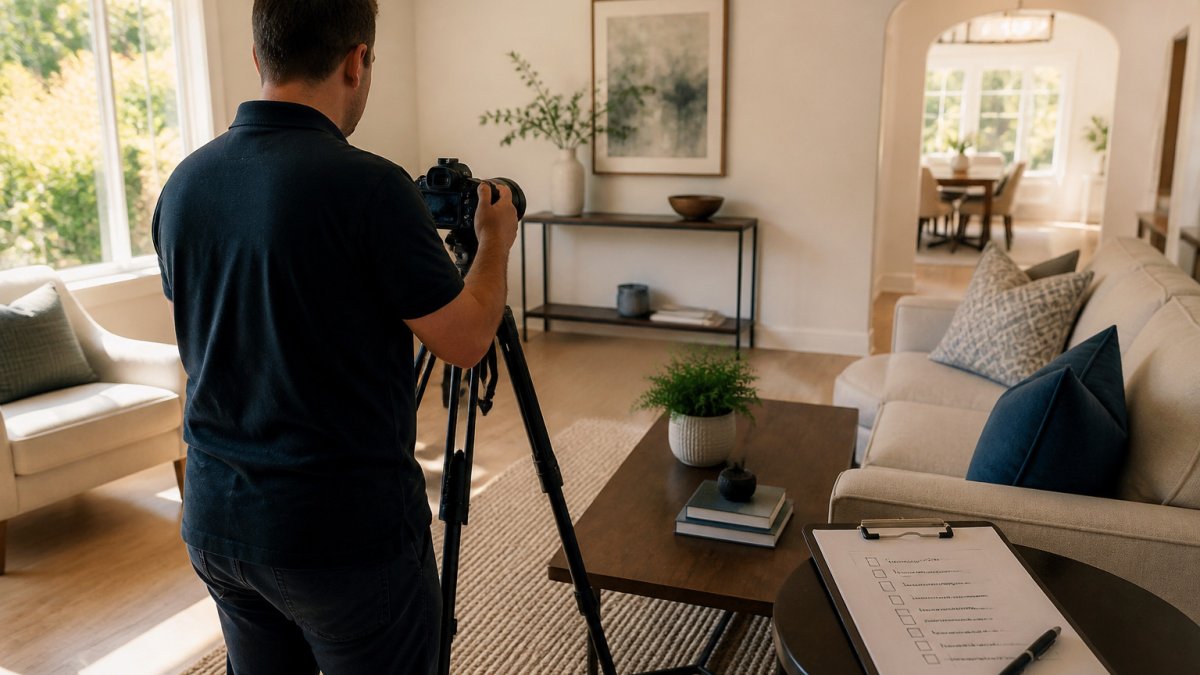
- Clear countertops, tables, and shelves of personal papers and mail.
- Remove or cover family photographs and personal items that are not part of the sale.
- Open blinds and curtains to let in natural light.
- Turn on all lights, including exterior fixtures.
A well-prepared interior can make a Burbank bungalow or a Pasadena family home look larger and better maintained in listing images.
!Photographer with a camera on a tripod in a tidy, sunlit living room in Burbank, with a clipboard showing a shoot checklist beside a neatly staged sofa
Photographing an Inherited House Without Exposing Private Belongings
Privacy is one of the most important concerns in probate photography. Heirs often find personal letters, medications, financial documents, and sentimental objects throughout an inherited home. Photos posted online can reveal details that heirs prefer to keep private.
A careful approach includes these steps:
- Walk through the property before the shoot and remove sensitive items.
- Close closets, drawers, and cabinets that contain personal belongings.
- Avoid photographing mail, identification documents, or anything with names and addresses visible.
- Keep bedrooms and home offices simple, or skip them if they hold private material.
Some sellers choose to limit the number of interior photos. Either approach can work, provided the decision is made deliberately.
Virtual Tour for Real Estate Listings: When It Helps Heirs Most
A virtual tour lets buyers move through a property online, usually as a 360-degree or 3D walkthrough. For probate listings, the decision to order one is not automatic. It should follow from the condition of the home, the privacy concerns of the estate, how buyers will access the property, and how the executor wants to run the sale.
Decision criteria for a probate listing
Use these questions to decide whether a virtual tour, still photography, or both make sense for a particular estate property.
- Property condition. If the home is dated, cluttered, or mid-repair, a full walkthrough can emphasize flaws that still photos would frame around. In that case, a carefully shot set of stills plus a floor plan often presents the property more fairly. If the home is clean and shows well, a tour lets buyers confirm quality without repeated visits.
- Privacy and sensitive contents. A 360-degree tour captures everything in the frame, including items heirs may not want public. If the property still holds family photographs, documents, or valuables, either clear those rooms before the shoot or limit the tour to selected areas. Stills give the photographer more control over what appears.
- Buyer access. When heirs live outside the area, when the executor wants to limit in-person showings, or when the property is in the Hollywood Hills or La Canada and drive-by interest is high, a tour reduces the number of appointments while still giving serious buyers a real sense of the layout.
- Layout complexity. Homes with unusual floor plans, multi-level lots, or strong outdoor features, a view deck in the Hollywood Hills, a large yard in San Marino, benefit from a tour because stills struggle to convey flow and scale.
- Sale process and timeline. A court-confirmed probate sale may draw offers on a set schedule. A tour published early gives out-of-area heirs and buyers time to review before offer deadlines. If the estate expects a fast private sale, stills and a floor plan may be enough.
Virtual tour versus still photography for probate
A virtual tour does not replace good still photography. Most listings benefit from both: still images for search results and a tour for buyers who want to explore the layout.
Watch out: a 360-degree tour can capture reflections, open doorways, and adjacent rooms that the photographer did not intend to publish. Review the full tour before it goes live, not just the hero image.
What to ask a tour provider
Before booking, confirm how the provider handles occupied properties, whether they can exclude rooms, how long the tour stays hosted, and whether the file can be re-published if the listing changes. Ask whether the tour includes a floor plan and whether drone imagery is available for hillside or large-lot properties common in the Hollywood Hills and La Canada.
The article lays out the main questions heirs should weigh before choosing a virtual tour, still photography, or both for a probate listing.
| Decision factor | Why it matters | When a tour helps most |
|---|---|---|
| Property condition | Cluttered or mid-repair homes can look worse on a tour | Clean homes that show well |
| Privacy and contents | A 360-degree tour captures everything in frame | Rooms already cleared of personal items |
| Buyer access | Fewer in-person showings are needed | Out-of-area heirs or limited showings |
| Layout complexity | Stills struggle to show flow and scale | Hillside or multi-level homes |
| Sale timeline | Early publication gives buyers time to review | Court-confirmed sales with offer deadlines |
Probate Property Listing Preparation: Condition, Contents and Documentation
Before a probate home is listed, the condition of the property and its contents should be documented. This protects the estate, helps set an accurate listing price, and answers buyers’ questions honestly.
Useful documentation includes:
- A written inventory of major items that will stay with the house, such as appliances and built-in fixtures.
- A list of items that will be removed before the sale.
- Notes on known repairs, system age, and any issues that have been disclosed.
- Photographs taken before cleanup, which can help if questions arise later about condition.
Heirs preparing a home for listing should also confirm that the property is insured while it is vacant, since many standard policies have restrictions on unoccupied homes.
The goal is to present the home accurately.
Booking Your Probate Shoot in Greater Los Angeles
Once authorization is in place and the property is ready, the next step is scheduling the photographer. Heirs in Burbank, Glendale, Pasadena, San Marino, La Cañada Flintridge and the Hollywood Hills should ask providers about their experience with estate properties and how they handle privacy and access. Heirs in Burbank can review our inherited home trust and probate guide for Burbank to see the next steps with a local agent.
What to confirm before the shoot date
- Who will be on site. The executor, administrator, or trustee should either attend or designate someone who can answer questions about rooms, belongings, and access. A neighbor or relative without authority should not be the only person present.
- Access details. Confirm gate codes, lockbox information, parking, and whether the property is vacant or occupied. Hillside properties in the Hollywood Hills and larger lots in La Canada can add travel and setup time that affects scheduling.
- Scope in writing. Agree on which rooms, exterior areas, and outbuildings are in scope, and which are excluded. Put the list in the booking confirmation so the photographer and the estate share the same expectations.
- Sensitive items. Tell the photographer in advance which rooms hold documents, medications, or valuables so they can be cleared or skipped. This is easier to handle before the shoot than to fix after images are published.
- Deliverables and timing. Ask when the edited images, floor plan, and any tour will be delivered, and who on the estate side will review them before publication.
Questions to ask a provider
- Have you photographed probate or estate properties before?
- How do you handle personal belongings and sensitive rooms?
- Can you provide virtual tours, floor plans, or drone images?
- What is included in each package, and where can current pricing be found?
- Who should be present at the shoot, and how do you coordinate with the executor?
Coordinating with the estate team
The photographer is one vendor among several. The executor or estate attorney usually controls the listing timeline, and the real estate agent coordinates marketing. Confirm that the shoot date fits the estate’s schedule and that any required court or trust approvals are already in place.
Watch out: booking a shoot before the cleanout is complete often produces images the estate cannot use, and a re-shoot adds cost and delay. Confirm the property is ready before the photographer arrives.
I can help heirs decide whether photography, a virtual tour, or both make sense for a particular probate property. Readers comparing who to hire can review my overview of residential real estate advisory services for Greater Los Angeles. To learn more about preparing a home for sale, you can read my guide to preparing a probate home for sale, or if you are ready to talk through your property, request your home’s value.
Frequently Asked Questions
How should an executor prepare a probate property for real estate photography?
Start by confirming with the court-appointed executor or administrator that the property is authorized for listing and photography. Clear walkways, remove personal papers and valuables from view, and make minor repairs that would distract buyers in photos. In Los Angeles County, many estates in Burbank, Glendale and Pasadena benefit from a walkthrough with the photographer before the shoot so access, lighting and sensitive areas can be planned in advance.
Can a probate property be photographed before the estate is ready to sell?
Usually only after the person with legal authority approves it. Photographs of an inherited home can appear on public listings, so it is wise to confirm that the executor or administrator agrees before any shoot. Some heirs choose to photograph the home early to document its condition, then decide later whether to publish the images.
Are virtual tours useful for selling an inherited home?
Virtual tours are useful when heirs live out of the area or cannot be present for every showing. A tour lets them review the home’s layout and condition remotely and share it with family members who need to approve decisions. For homes in the Hollywood Hills or La Cañada Flintridge, a virtual tour can also show buyers the layout before an in-person visit.
Should an executor use a 3D tour or a standard virtual tour?
A standard virtual tour works well for most probate listings and usually costs less. A 3D or interactive walkthrough is more helpful for larger or unusually laid-out homes, such as those in San Marino or La Canada Flintridge. For current pricing, contact me directly.
