
Table of Contents
- What Residential Real Estate Advisory Services Include
- Hiring a Real Estate Consultant vs Agent: Key Differences
- Real Estate Investment Consulting in Los Angeles
- Los Angeles Residential Market Trends and Insights
- How to Choose the Right Residential Real Estate Advisor
- Specialized Advisory: Trust, Probate, and Complex Sales
- Building Your Real Estate Strategy with Local Expertise
Last Updated: August 6, 2026
What Residential Real Estate Advisory Services Include
Residential real estate advisory is a comprehensive service that goes far beyond listing a property on the MLS. A residential real estate advisor provides strategic guidance across the entire investment cycle, from acquisition through disposition, combining market analysis, property valuation, and negotiation expertise tailored to your specific situation.
At Will Flannigan Real Estate, we understand that homeowners and investors need more than transactional support. They need someone who understands fiduciary responsibility, local zoning regulations, and neighborhood nuances. The advisory approach differs fundamentally from traditional brokerage because it prioritizes your interests first, not commission velocity.
Core advisory services include market analysis specific to your property type and location, due diligence and feasibility studies for investment properties, highest and best use determinations, negotiation strategy development, and portfolio optimization for multiple properties. For complex situations like trust sales or probate transactions, advisors provide legal-adjacent guidance that coordinates with attorneys while managing the actual real estate transaction.
The best time to engage a residential real estate advisor is before you’re ready to transact. Market knowledge compounds over time, and advisors who understand your goals and timeline can position you for better outcomes when the right opportunity appears.
Hiring a Real Estate Consultant vs Agent: Key Differences
The difference between hiring a real estate consultant versus a traditional agent hinges on fiduciary responsibility and compensation alignment.
A real estate agent operates under a commission-based model where compensation comes from the transaction. An agent’s financial incentive is to close deals, which can create tension with your interests. A real estate consultant, by contrast, operates from a fiduciary position where your interests come first. Will Flannigan Real Estate’s approach, grounded in a background as a former attorney, emphasizes steady guidance and careful consideration of your long-term position rather than transaction velocity.
In practice, a traditional agent will list your home and present offers as they arrive. A residential real estate consultant will analyze market conditions, help you understand your property’s actual value, develop a negotiation strategy, and position you for the strongest possible outcome. If the market is soft, an advisor might recommend waiting. If competition is high, they’ll develop tactics to stand out.
The consultant model also means deeper engagement with complex transactions. Trust sales, probate properties, and high-value residential properties require knowledge of entitlement processes, property tax assessment implications, and coordination with legal counsel. A consultant treats these as core specialties.

A common mistake is assuming all agents operate the same way. The key is asking directly: How do you get paid? Do you represent my interests or the transaction? What happens if the market changes and waiting becomes the right move?
Real Estate Investment Consulting in Los Angeles
Los Angeles presents unique challenges and opportunities for real estate investment consulting. The market’s diversity, from Burbank to San Marino to Hollywood Hills, means that investment strategy must account for neighborhood-specific capital appreciation potential, zoning regulations that vary significantly by area, and the highest and best use of each property.
Real estate investment consulting in Los Angeles requires deep understanding of the acquisition and disposition cycle. Investors need to know which neighborhoods are appreciating, which are stabilizing, and which face headwinds. They need to understand how zoning restrictions affect development potential.
Will Flannigan Real Estate’s nearly 20-year presence in the Burbank Rancho neighborhood provides the kind of local expertise that matters for investment decisions. You’re getting insights from someone who has watched neighborhoods evolve, seen which improvements drive value, and understands the regulatory landscape that shapes development potential.
Investment consulting also addresses portfolio management and risk mitigation. If you own multiple properties, a consultant helps you understand your overall exposure, identify which assets to hold for yield optimization and which to disposition, and coordinate timing to manage tax implications. This is where the advisory approach creates measurable value across your entire portfolio.
Los Angeles Residential Market Trends and Insights
The Los Angeles residential market in 2026 reflects broader trends in buyer behavior, property valuation, and neighborhood preference that shape advisory strategy.
Remote work flexibility has extended buyer search areas beyond traditional commute zones, creating demand in previously secondary neighborhoods. Sustainability and green building compliance have become significant factors in property valuation, particularly for higher-end residential properties. Interest rate environment continues to affect affordability and buyer pool size. Property tax assessment methodology remains a consideration for long-term holders.
Neighborhood-specific trends matter enormously in Los Angeles. Some areas are experiencing rapid appreciation as infrastructure improves and new transit options open. Others face headwinds from zoning changes or commercial encroachment. A residential real estate advisor tracks these trends because they directly affect your property’s position in the market cycle.
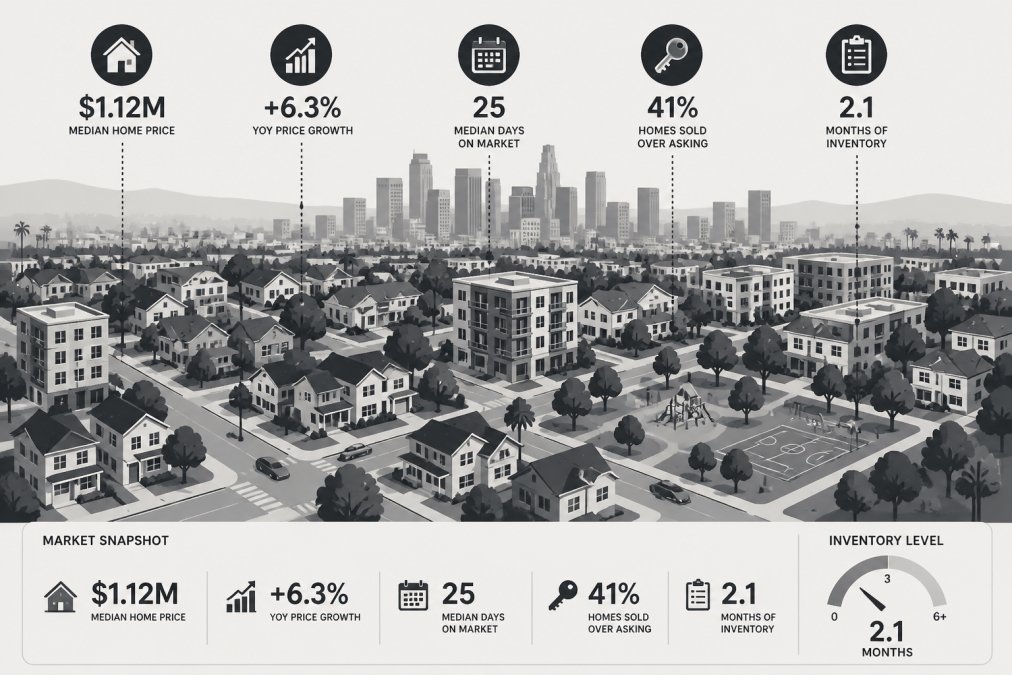
The luxury residential market segment shows distinct patterns. High-value properties face different buyer pools, longer marketing timelines, and higher sensitivity to market cycle positioning. Negotiation strategy for a $3M property in Hollywood Hills differs fundamentally from a $1.2M property in Burbank. A residential real estate advisor understands these distinctions and positions your property accordingly.
The most valuable market insight isn’t the trend itself, it’s how that trend applies to your specific property, neighborhood, and timeline. Customized analysis tied to your situation is where advisory value emerges.
How to Choose the Right Residential Real Estate Advisor
Selecting a residential real estate advisor requires evaluating several dimensions that go beyond reputation or years in business. You’re looking for someone whose approach aligns with your needs, whose local knowledge is genuine, and whose fiduciary commitment is real.
Start with specialization. What does this advisor actually specialize in? Are they focused on your neighborhood? Do they have particular expertise in your transaction type, buying, selling, investment analysis, trust sales, or probate? Will Flannigan Real Estate’s specialization in the Burbank Rancho neighborhood and trust and probate sales means deep knowledge in specific areas rather than shallow familiarity across all transaction types.
Ask directly about their approach to complex situations. If you’re navigating a trust sale or probate property, how do they coordinate with attorneys? Have they handled similar transactions? The answers reveal whether they’re truly experienced or simply willing to figure it out.
Evaluate their market knowledge claims by asking specific questions about your neighborhood. What’s the current absorption rate? How have property values moved in the last 18 months? What zoning restrictions affect development potential? If they answer with specificity and detail, they likely have genuine local knowledge.
Consider their willingness to tell you what you don’t want to hear. A good advisor will recommend waiting if the market isn’t right, suggest a lower price if overpricing is likely, or advise against a purchase if the numbers don’t work.
Finally, assess cultural fit and communication style. You’re going to be discussing sensitive financial and personal information. You need someone you trust, who communicates clearly, and who understands your situation. For Mandarin-speaking clients, language capability matters not just for communication but for cultural understanding and negotiation nuance.
Specialized Advisory: Trust, Probate, and Complex Sales
Trust and probate sales represent a category of real estate transactions where traditional brokerage expertise falls short. These sales involve legal complexity, emotional weight, and coordination requirements that demand specialized advisory.
A probate sale is a property transaction conducted through the probate court system. The executor or administrator of an estate must follow specific procedures, obtain court approval for the sale, and navigate timelines that don’t follow normal market rhythms. A probate property isn’t just a house for sale, it’s an asset of an estate subject to legal oversight.
The complexity multiplies when multiple beneficiaries are involved, when the property requires significant repairs, or when family disagreement exists about timing or price. A residential real estate advisor with probate expertise understands the legal requirements, coordinates with the probate attorney, manages the marketing and sale process, and ensures that the transaction meets all court-mandated timelines and procedures.
What makes these transactions different from standard sales is that emotional factors often override financial ones. You’re selling a parent’s home. You’re managing disagreement between siblings about price or timing. A residential real estate advisor brings steady guidance, clear communication about what’s legally required versus what’s discretionary, and respect for the emotional dimensions of the situation.
Will Flannigan Real Estate’s specialization in trust and probate sales means this isn’t a side service, it’s a core competency. You’re getting someone with deep experience in the legal coordination, timeline management, and emotional intelligence these transactions demand.
In probate and trust sales, the right advisor coordinates with your attorney rather than replacing them. Your attorney handles legal compliance. Your advisor handles the market positioning, buyer acquisition, and negotiation.
Building Your Real Estate Strategy with Local Expertise
A residential real estate strategy isn’t built transaction-by-transaction. It’s built through understanding your long-term position, your risk tolerance, your timeline, and your goals, then positioning each decision within that framework.
Local expertise shapes strategy because neighborhoods don’t move in lockstep. A property appreciating 8% annually in one Los Angeles neighborhood might appreciate 3% in another. Zoning restrictions that limit development potential in one area don’t apply in another.
Building strategy requires understanding your personal situation. Are you buying to live long-term or as an investment? Do you have a timeline or flexibility? Are you managing multiple properties or focused on one? Are you concerned about yield optimization or capital appreciation? A residential real estate advisor integrates your answers into a coherent strategy rather than treating each transaction in isolation.
Will Flannigan Real Estate’s approach emphasizes this strategic dimension. The goal isn’t to close deals, it’s to position you for success in the Los Angeles residential market. That orientation produces better long-term outcomes than transactional focus ever could.
Selling a home, navigating a trust sale, or making an investment decision in Los Angeles deserves more than transactional support. A residential real estate advisor who combines local expertise with fiduciary commitment delivers the strategic guidance that shapes better outcomes. Will Flannigan Real Estate brings nearly 20 years of Burbank Rancho neighborhood knowledge, specialized trust and probate expertise, and an attorney-informed approach to every transaction. What’s my home worth? Get a personalized market analysis that positions your property strategically in today’s market.
| Advisor Type | Compensation | Primary Focus | Best For |
|---|---|---|---|
| Traditional Agent | Commission per transaction | Closing deals | Simple buy/sell transactions |
| Real Estate Consultant | Hourly, flat fee, or transaction-based | Strategic guidance | Complex sales, investment analysis, market positioning |
| Will Flannigan Real Estate | Transaction-based with fiduciary approach | Long-term positioning and specialized expertise | Trust/probate sales, high-value properties, local market strategy |
Frequently Asked Questions
What does a residential real estate advisor do?
A residential real estate advisor guides you through buying, selling, or investing in residential properties. They provide market analysis, property valuation insights, negotiation support, and strategic advice based on your financial goals. Unlike transactional agents, advisors focus on fiduciary responsibility and long-term wealth preservation, ensuring your interests come first, especially important for complex situations like trust sales, probate transactions, or high-value properties where expert guidance protects your equity.
How is a real estate advisor different from a real estate agent?
A real estate advisor operates as a fiduciary, legally bound to prioritize your interests above their own commission. Real estate agents focus on closing transactions and earning commission. Advisors typically provide deeper market analysis, investment strategy consultation, and longer-term relationship building. For complex transactions like probate or trust sales, an advisor's fiduciary duty and legal expertise matter significantly. In Los Angeles, where residential properties often involve multi-generational wealth and complex ownership structures, this distinction directly impacts your financial outcome.
Why should I work with a local Los Angeles advisor instead of a discount brokerage?
Local advisors possess neighborhood-specific knowledge, comparable sales, zoning regulations, market cycles, and community relationships that discount brokerages cannot replicate. In neighborhoods like Burbank Rancho, San Marino, and Hollywood Hills, property values depend heavily on micro-market conditions, school district changes, and development trends. A local advisor with deep roots negotiates better terms, identifies off-market opportunities, and protects you from overpaying during bidding wars. Their fiduciary approach ensures you're not rushed into a quick close just to hit commission targets.
How does a real estate advisor help with trust and probate sales?
Trust and probate sales involve court requirements, title clearance, beneficiary coordination, and strict timelines that standard real estate transactions don't. An advisor with probate expertise guides executors and trustees through the entitlement process, ensures compliance with California probate law, and handles sensitive family negotiations. They understand fiduciary duties owed to beneficiaries and can prevent costly mistakes. For families already stressed by loss, this specialized guidance reduces anxiety and protects the estate's value throughout the entire disposition process.
What should I look for when choosing a residential real estate advisor in LA?
Prioritize fiduciary commitment, neighborhood expertise in your target area, and a track record with your specific transaction type. Ask about their market analysis process, due diligence standards, and how they approach risk mitigation. For high-value properties, verify negotiation experience and portfolio management expertise. Check how long they've been active in your neighborhood, deep community relationships matter. If you need Mandarin-speaking services or have complex trust situations, confirm their capabilities directly rather than assuming.
How does local market knowledge actually protect me from overpaying?
Local advisors track comparable sales, absorption rates, and market volatility patterns that public MLS data alone cannot reveal. They identify emerging neighborhoods before prices spike and recognize overpriced listings quickly. In Los Angeles's competitive residential market, understanding highest and best use, zoning restrictions, and capital appreciation potential prevents costly mistakes. An advisor with neighborhood roots knows which properties appreciate long-term and which carry hidden risks, information that protects your equity and investment strategy.
What's the difference between real estate advisory and real estate investment consulting?
Real estate advisory focuses on your specific transaction, buying, selling, or managing a property with expert guidance and fiduciary protection. Real estate investment consulting in Los Angeles addresses portfolio strategy, capital allocation across multiple properties, yield optimization, and wealth preservation across your entire real estate holdings. Investment consulting is appropriate if you own or plan to own multiple residential properties and need integrated strategy. Both approaches benefit from local market analysis, but investment consulting takes a broader, longer-term wealth-building perspective.
This article was written using GrandRanker