
Table of Contents
- Marketing Strategies for Probate Properties: A Los Angeles County How-To
- What You’ll Need Before You Start
- Step 1: Find Probate Leads in Burbank, Glendale, and Pasadena
- Probate Real Estate Outreach Scripts That Respect Grieving Families
- Probate Lead Follow-Up Strategies for a 6-12 Month Timeline
- Probate Property Listing Strategy for LA County Homes
- Probate Property Marketing Examples That Convert in Los Angeles
- Building Referral Relationships With Probate Attorneys in LA County
- Conclusion: A Repeatable Probate Marketing Workflow
- Frequently Asked Questions
Last Updated: October 8, 2026
Marketing Strategies for Probate Properties: A Los Angeles County How-To
Probate properties arrive after a death, a court process, and months of family decisions, which changes how you find them and how you talk to the people who own them. This guide from Will Flannigan Real Estate covers the workflow across Burbank, Glendale, Pasadena, and the surrounding San Fernando Valley and foothill communities.
Probate marketing is the practice of finding estate-owned homes, reaching the personal representative with care, and staying in contact until the property is ready to list. It rewards patience more than speed.
What You’ll Need Before You Start
You need four things before your first outreach: a data source, a process for confirming authority, a written script, and a follow-up calendar.
- A lead source. Los Angeles County Superior Court probate filings, public notices, and local legal publications.
- A contact record. Names, mailing addresses, and case numbers for each personal representative.
- A script. One version for phone, one for mail, one for email.
A common mistake is mailing the deceased’s last address instead of the personal representative’s address of record. Those letters get returned or, worse, opened by a family member who never wanted contact. Check the filing before every send.
Step 1: Find Probate Leads in Burbank, Glendale, and Pasadena
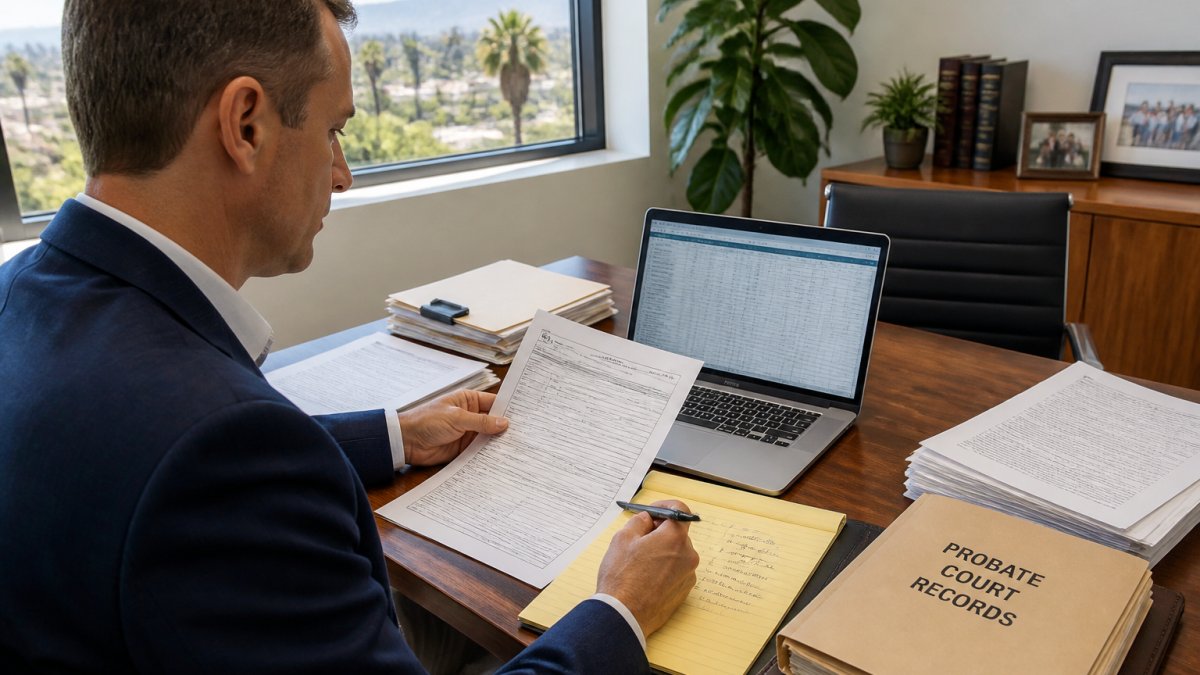
Start with the courthouse, not a purchased list. Los Angeles County probate cases are filed publicly and name the personal representative, the property address, and the case number.
Where Los Angeles County Probate Records Live
The Los Angeles County Superior Court probate division publishes case information and filing locations. Local legal newspapers carry notices of petition, which often appear before the case is fully opened. Both are free to search in person.
Qualifying Leads Before You Reach Out
Not every filing is a listing. Filter for the ones worth your time:
- The property sits in your service area.
- The estate is not already under exclusive contract.
- The home is likely to be sold rather than kept by heirs.
Probate Real Estate Outreach Scripts That Respect Grieving Families
The first contact sets the tone. Lead with condolences, not a pitch. Our structure:
- Acknowledge the loss in one plain sentence.
- Introduce yourself and your role briefly.
- Offer help, not a listing appointment.
- Ask one low-pressure question.
- Leave the door open.
Phone Script Example for Personal Representatives
“Hello, my name is [Name] with Will Flannigan Real Estate. I’m sorry for your loss. I work with families in [City] who are handling an estate property, and I wanted to offer a resource rather than a sales call. If you ever need a plain-English rundown of what selling during probate looks like, I’m glad to send it.
Never ask “Are you ready to sell?” on the first call. Ask whether they have a copy of the court’s Letters of Administration yet. That one question tells you where they are in the process without pressuring them.
Probate Lead Follow-Up Strategies for a 6-12 Month Timeline
Probate moves slowly, so your follow-up should match that pace, and be measurable.
The Cadence That Fits LA County Probate Timelines
Los Angeles County probate cases typically run six to eighteen months from filing to distribution. Your touchpoints should land inside that window without crowding it.
- Month 1: Condolence letter and a plain-English resource guide by mail. No phone call yet, the family is still in the earliest stage of grief and paperwork.
- Month 2: Short phone check-in. Ask one question: do they have the court’s Letters of Administration yet? That single answer tells you where they are in the process.
- Month 3: Neighborhood market update specific to their property type and city, a Burbank single-family home gets a different update than a Glendale condo.
Channel-by-Channel Measurement
Track five numbers per channel, direct mail, phone, email, and online advertising:
| Metric | What It Tells You |
|---|---|
| Response rate | Whether the message reached a live decision-maker |
| Qualified lead rate | Whether the responder actually has authority to list |
| Appointment rate | Whether your script converts interest into a meeting |
| Conversion rate | Whether appointments become signed listings |
| Cost per acquisition | Whether the channel is worth continuing |
What to Do With the Numbers
After four to six months of data, the cadence stops being a guess:
- Cut the channel with the highest cost per acquisition and the lowest qualified lead rate.
- Double the touchpoints on the channel with the highest appointment rate.
- Add a second mail piece in month 4 for leads that never responded to month 1. A meaningful share of probate listings come from the second or third contact, not the first.
Compliance and Data Hygiene
The Federal Trade Commission guidance on the Do Not Call Registry applies to probate outreach the same way it applies to any other solicitation. Before any phone campaign:
- Scrub your list against the National Do Not Call Registry.
- Keep records of when and how consent was obtained, if any.
- Honor opt-out requests immediately and permanently.
Probate records are public, but public does not mean unrestricted. Use filing data to identify the personal representative of record, not to build a broad contact list.
A Note on Timing and Tone
The biggest measurement error in probate marketing is treating a non-response as a rejection. A family that ignores a month-1 letter and month-2 call may sign in month 9. Agents who win keep the record and keep the cadence.
Build your follow-up calendar in a spreadsheet before you send the first letter. If you cannot see every scheduled touchpoint for the next twelve months on one screen, you do not have a follow-up system, you have good intentions.
Probate Property Listing Strategy for LA County Homes
When the listing comes, your job shifts from patience to preparation. Probate homes often need work, and heirs often disagree about how much to do.
Pricing and Preparing the Property
Price to the condition, not to a fantasy renovation. Buyers in Burbank, Glendale, and Pasadena know these neighborhoods well, and they price deferred maintenance into every offer.
- Get a pre-listing inspection so surprises surface early.
- Offer a clear “as-is” option alongside a light-prep option.
- Document every disclosure item in writing.
| Situation | Recommended Approach | Why It Works |
|---|---|---|
| Multiple heirs, split opinions | Present two written scenarios | Removes emotion from the decision |
| Heavy deferred maintenance | List as-is with full disclosure | Attracts investor and end-buyer interest |
| Well-maintained estate home | Light staging, standard pricing | Competes with traditional listings |
| Out-of-state personal representative | Remote signing and weekly updates | Reduces travel and delay |
Probate Property Marketing Examples That Convert in Los Angeles
Listings that move fastest share one trait: they tell the truth about the property and the process.
Examples that work in the market:
- A Studio City estate home listed as-is with a full inspection report attached.
- A San Marino property where the agent hosted a single weekend open house and published a plain-English probate timeline for buyers.
- A La Cañada home where the personal representative recorded a short video walkthrough.
What these share is transparency.
Building Referral Relationships With Probate Attorneys in LA County
Attorneys are a high-value referral source in probate work. One mishandled client interaction can end a relationship. Agents who win repeat referrals treat the attorney’s caseload as the priority, not their own pipeline.
Where LA County Probate Referrals Actually Originate
Referrals rarely come from a cold lunch. They come from three places:
- Estate planning and trust attorneys in Burbank, Glendale, and Pasadena who handle the upstream work and hand off administration when a client dies. These are high-volume sources because they see the family before the death, not after.
- Probate litigators working contested matters in Los Angeles County Superior Court. Their cases take longer but can produce listings that other agents may not see.
- CPAs and fiduciaries who serve as professional personal representatives on estates with no willing family member. These contacts are quieter but can produce clean, well-documented listings.
The first referral from any of these sources can be a test: the attorney watches whether you create work for their staff or absorb it.
What Attorneys Actually Screen For
Before an attorney puts your name in front of a grieving family, they are quietly checking four things:
- Do you understand authority? Can you tell the difference between a personal representative acting under Letters of Administration versus a successor trustee acting under a trust instrument? If you cannot, you will ask the attorney to explain it, and that is a strike against you.
- Do you return calls the same day? Not the same week. Same day. Attorneys refer agents who can help manage their workload.
- Do you send written status updates? A short email after every showing, every offer, and every inspection keeps the attorney informed without a phone call. Attorneys may forward these to heirs.
- Do you stay in your lane? Never give legal advice, never contact a client outside the attorney’s preferred channel, and never speculate about how a court will rule.
The Trust Sale vs. Full Probate Distinction
This is the most common mistake agents make with LA County attorneys. A trust sale, where the property is held in a revocable living trust and the successor trustee has authority under the trust document, moves like a normal sale.
If you walk into an attorney’s office and treat both the same way, it may hinder future meetings. If you can explain the difference, it can be beneficial.
Compliance Guardrails for Attorney Relationships
The State Bar of California rules on attorney solicitation and referral fees govern how attorneys may share fees and make referrals. In practice, this means:
- Do not offer or accept anything of value in exchange for a referral without written disclosure and compliance with the Rules of Professional Conduct.
- Do not ask an attorney to recommend you to a client who has not asked for a referral.
- Do not contact a family directly until the attorney has introduced you.
A referral relationship built on a fee arrangement that skips these steps is a liability, not a marketing strategy.
A Simple Earning Sequence
Most agents who build a durable attorney referral pipeline follow a version of this sequence:
- Month 1-3: Attend local bar association estate planning section meetings and probate court calendars in Los Angeles County. Introduce yourself, ask what makes their job harder, and offer a resource they can hand to clients.
- Month 3-6: Deliver on the first small ask, a market opinion, a referral to a contractor, a plain-English timeline. No listing pitch.
- Month 6-12: The first referral usually arrives here. Handle it flawlessly, send written updates, and follow up with the attorney after closing to thank them.
The California Courts self-help center on probate explains the process in plain language, which is a useful resource to share with families who are early in the process, and a useful thing to hand an attorney who wants their clients educated without doing it themselves.
Agents who win probate listings are often those attorneys trust to not create extra work, and who can demonstrate it with timely communication and written updates after showings.
Conclusion: A Repeatable Probate Marketing Workflow
Probate work looks slow right up until it isn’t. A family that ignored your mail for eight months can call on a Tuesday and need a listing by Friday.
Will Flannigan Real Estate handles that entire arc, from first condolence letter to closing table.
Get started with Will Flannigan Real Estate for guidance on probate properties.
Frequently Asked Questions
What are the most effective marketing strategies for probate properties?
The most effective approach combines direct mail to personal representatives, sensitive phone outreach, attorney referrals, and a follow-up cadence that lasts six to twelve months. In Los Angeles County, probate sales often take six to eighteen months to close, so consistent follow-up matters more than any single channel. Pair these with a credibility website that explains the probate process and a listing strategy that prices the home accurately for the local market.
How do you follow up with probate property owners without being intrusive?
Space your outreach around the probate timeline rather than a fixed sales cadence. Send a condolence note first, then a helpful letter about the probate process, then a call after the personal representative has had time to grieve. Limit contact to every three to four weeks and always lead with information, not a pitch. Mention that you are available when they are ready, and let them set the pace.
How can an agent build relationships with probate attorneys?
Attend local bar association events, estate planning council meetings, and community gatherings in areas like Burbank, Glendale, and Pasadena. Offer to be a resource for their clients by providing market updates and property valuation guidance without expecting an immediate referral. Send a brief monthly note with relevant probate real estate news. Attorneys refer agents they trust to handle sensitive family situations with care.
What should a probate property listing include?
A probate listing should include a clear property description, professional photos, disclosure of the probate status, and details about court confirmation requirements if applicable. Highlight recent updates, lot size, and neighborhood amenities. In Los Angeles County, buyers often want to know about school districts, commute times, and comparable sales. Include a short guide explaining the probate sale process so buyers understand the timeline.