
Table of Contents
- What Happens During a Real Estate Closing: The Complete Process
- Who Attends a Real Estate Closing
- Documents Signed at Closing
- What to Bring to a House Closing
- How Long Does Closing Take
- What Not to Do Before Closing
- The Final Walk-Through and Key Handoff
- After Closing: What Happens Next
- Frequently Asked Questions
Last Updated: October 18, 2026
What Happens During a Real Estate Closing: The Complete Process
A real estate closing is the final step in buying or selling a home: ownership transfers, funds change hands, and you receive the keys.
I guide buyers and sellers through closings in the Burbank, Glendale, and Pasadena areas. Closings follow a predictable structure, once you understand the sequence, the paperwork, and who does what, you’ll walk in confident.
Here’s what actually happens during a real estate closing, step by step.
Who Attends a Real Estate Closing
A typical real estate closing brings together several key people in the same room (or virtual meeting space). Each person has a specific role.
The buyer and seller are the principals, there to sign documents and authorize the transfer of funds.
The closing agent or title company representative runs the meeting, ensuring documents are signed correctly, funds transfer safely, and the deed is recorded.
The real estate attorney (common in some transactions, required in others) reviews contracts and protects your interests.
The lender’s representative may attend or participate remotely to verify the loan is funded and all conditions are met.
Real estate agents (yours and the listing agent) often attend to answer last-minute questions.
Optional attendees include a family member, an accountant or financial advisor, or a translator.
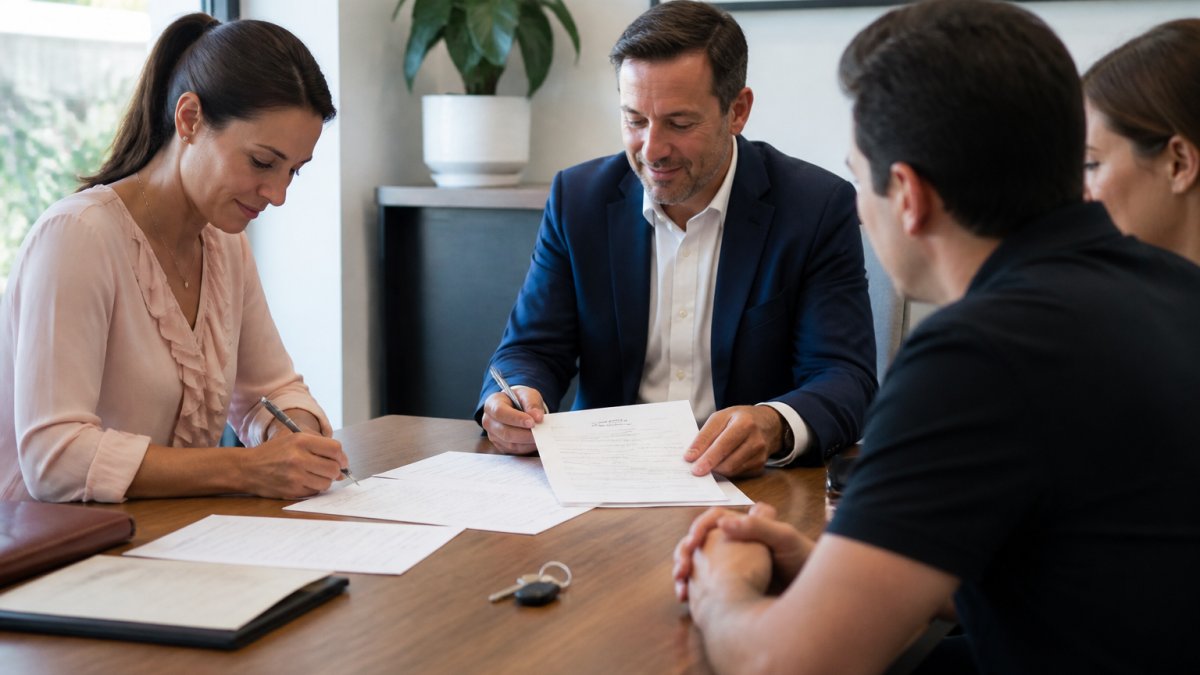
Not everyone needs to be physically present, many closings allow remote participation via video conference, though the buyer and seller typically sign in person.
Documents Signed at Closing
The paperwork stack at closing looks intimidating, but it falls into a few categories: the loan, the transfer of ownership, the money, and the protections.
The Closing Disclosure. The most important document for a buyer, it shows your final loan terms, interest rate, monthly payment, and every closing cost. Federal law requires delivery at least three business days before closing (Closing disclosure explainer).
The promissory note. Your promise to repay the loan. Check the loan amount, interest rate, first payment date, and any prepayment penalty; the numbers must match the Closing Disclosure.
The deed of trust. This gives the lender a security interest in the home until the loan is paid, in California, the standard instrument rather than a mortgage.
The deed. This transfers ownership from seller to buyer.
The settlement statement. This itemizes every cost: agent commissions, title insurance, property taxes, homeowner’s insurance, recording fees, and any HOA transfer fees.
Title insurance policies. The lender’s policy protects the lender; the owner’s policy protects you. The seller often pays for the owner’s policy, but this is negotiable.
Affidavits and certifications. These confirm you’ve made no undisclosed claims on the property, are the correct party, and know of no liens or judgments. They’re signed under penalty of perjury.
Lender disclosures and authorizations. These vary by lender but often include occupancy certifications, automatic payment authorizations, and servicing notices.
For sellers, the package is smaller. Sellers typically sign the deed, settlement statement, seller’s affidavit, and any city or county transfer documents. In trust sales, the trustee also signs a certification of trust authority.
Do not sign a document you do not understand just because everyone is waiting. Ask the closing agent to explain it. A good escrow officer expects questions and would rather answer them before signing than fix a problem after recording.
A practical habit: before closing, ask your escrow officer for a copy of the deed and Closing Disclosure so you can check names, the legal description, and loan terms in advance.
What to Bring to a House Closing
Bring the right documents and you’ll move through closing faster.
Photo ID (driver’s license or passport) is required to verify your identity.
Proof of homeowner’s insurance (for buyers). Your lender won’t fund without it, bring the declaration page showing coverage start date and amounts.
Cashier’s check or wire transfer authorization for your down payment and closing costs. Ask your closing agent in advance which method they prefer and the exact amount due.
Bank statements (optional) to show the source of your funds if questioned.
List of questions or concerns. Write down anything you want clarified before signing.
A trusted advisor (spouse, family member, accountant) to catch errors.
Proof of employment or income (rare but possible). Some lenders verify employment on closing day.
I recommend calling the closing agent one week before closing to confirm exactly what documents to bring.
How Long Does Closing Take
A typical closing in Los Angeles County runs about 60 to 90 minutes once everyone is seated, but the clock starts well before you arrive.
Here is a realistic closing-day timeline for a financed purchase in Burbank, Glendale, Pasadena, or the surrounding areas.
Before you arrive (morning of closing). The closing agent or escrow officer confirms the lender has issued funding instructions, the title company has cleared the title, and the county recorder has the deed package ready.
Next 30 to 45 minutes: signing. For a buyer, this is the bulk of the appointment: the Closing Disclosure, promissory note, deed of trust, deed, lender disclosures, and affidavits. The closing agent walks through each document and answers questions.
Next 15 to 30 minutes: funding and disbursement. The lender wires loan funds to the escrow or title company. The closing agent confirms receipt, calculates the seller’s proceeds, and prepares the deed for recording.
Final 10 to 15 minutes: keys and possession. Once documents are signed and funds are confirmed, the seller’s agent or the seller hands over keys, garage remotes, and any access codes.
Delays are common and usually fall into a few buckets:
- Funding delays. The lender’s wire has not arrived, or the bank places a fraud hold on a large transfer. This is the single most common reason a closing slips by hours.
- Title issues. A lien, judgment, or missing payoff appears at the last minute. The title company must clear it before recording.
- Document errors. A name misspelling, wrong legal description, or missing signature requires a re-draw and re-signing.
- Last-minute changes. A revised Closing Disclosure, a changed payoff amount, or a seller concession added late can restart the three-business-day review clock.
- Sequential closings. If the seller is buying another home the same day, their purchase must fund before your closing can complete.
Ask your escrow officer the day before closing for a realistic arrival time and whether the lender has already issued funding instructions. If the answer is “we’re waiting on the lender,” plan for a later start rather than sitting in the lobby.
To keep your closing on schedule, send your wire early in the day, confirm your homeowner’s insurance binder is on file, and respond immediately to any lender or escrow request. In Los Angeles County, recorder cut-off times and electronic recording queues affect when your deed is officially recorded, so ask your escrow officer whether same-day recording is realistic.
What Not to Do Before Closing
The period between your offer acceptance and closing day is critical. Mistakes now can derail everything.
Don’t make large purchases or take on new debt. A car loan, credit card debt, or furniture financing changes your debt-to-income ratio.
Don’t change jobs. Employment changes raise red flags for lenders. If a job change is unavoidable, notify your lender immediately.
Don’t move money around unexplained. Large deposits into your bank account trigger fraud checks.
Don’t close existing credit accounts. This lowers your available credit and can hurt your credit score.
Don’t make late payments on existing loans. Payment history matters. One late payment close to closing can jeopardize your loan approval.
Don’t make major repairs or renovations before closing. The lender’s appraiser has already assessed the home; major changes could trigger a new appraisal and delay closing.
Don’t skip the final walk-through. This is your last chance to verify that agreed-upon repairs were completed and that the property is in the condition you expect.
Don’t wire funds to an unfamiliar account without verification. Wire fraud targeting real estate closings is real.
The Final Walk-Through and Key Handoff
The final walk-through happens hours before closing or on closing day itself. You inspect the property one last time to confirm it matches your expectations.
Check that agreed-upon repairs are complete. If the seller agreed to fix inspection issues, verify the work was done properly.
Confirm personal property. If the sale included appliances or fixtures, make sure they’re still there; if the seller was to remove personal items, verify they’re gone.
Look for new damage. Has anything been damaged since your last visit? Document it with photos and notify the closing agent immediately.
Test utilities. Turn on lights, check water pressure, and test the HVAC system.
Verify that the property is vacant and ready for handoff. Are the seller’s belongings out? Is the home clean?
If you find problems, alert the closing agent before signing final documents. Once you sign, the property is yours, problems and all.
The key handoff happens after all documents are signed and funds are transferred.
Some closings happen in the title company office, others at the property itself.
After Closing: What Happens Next
Closing day isn’t the end, it’s the beginning of your ownership.
The deed is recorded. The closing agent files the deed with the county assessor’s office. This typically happens within 1 to 3 business days.
You receive the final closing documents. The closing agent provides copies of everything you signed: the Closing Disclosure, promissory note, deed of trust, settlement statement, and title insurance policy.
Your loan begins. Your first mortgage payment is typically due 30 to 60 days after closing. Your lender will send payment instructions.
Homeowner’s insurance takes effect. Your policy begins on closing day. Make sure your insurance company has received notice of the closing and that coverage is active.
You update your address. Notify the post office, employer, banks, and insurance companies.
You may have post-closing adjustments. Property taxes, homeowner association fees, and utility costs are often prorated between buyer and seller.
You take possession. Move in, change the locks if desired, and make the home yours.
I’m here to guide you through every step, from offer to closing and beyond. Whether you’re buying your first home in Burbank, selling a family property in Pasadena, or navigating a trust sale in Glendale, my fiduciary approach ensures you understand each decision and feel confident about your real estate transaction.
Buying or selling a home involves complex decisions and significant financial commitment.
What’s My Home Worth?
Frequently Asked Questions
What should you not do during the closing process?
Avoid making large purchases, opening new credit accounts, or changing jobs before your real estate closing date. These actions can affect your loan approval and financing. Do not make deposits into your bank accounts without documenting the source, as lenders verify all funds. Do not sign documents you don’t understand, ask your closing agent or attorney to explain anything unclear. Finally, do not wire funds without confirming the wiring instructions directly with your title company or closing agent by phone, as wire fraud is common in real estate transactions.
How long does a real estate closing typically take?
A typical real estate closing appointment takes 1 to 2 hours. The exact time depends on whether you are a buyer or seller and the complexity of the transaction. Buyers generally spend more time at closing because they review and sign more documents, including the promissory note, deed of trust, and closing disclosure. Sellers typically finish faster since they are mainly signing the deed and settlement statement. Trust and probate sales may take longer due to additional documentation requirements.
What documents do you sign at a real estate closing?
Buyers sign the promissory note (your loan obligation), deed of trust (lender’s security interest), closing disclosure (final loan terms and costs), and the deed transferring ownership. You also sign title insurance documents and any additional lender-required paperwork. Sellers sign the deed transferring ownership to the buyer, the settlement statement showing fund distribution, and title documents. Both parties may sign affidavits or other documents specific to their transaction. Your closing agent will explain each document before you sign.
What do you need to bring to a house closing?
Bring a valid government-issued photo ID, proof of homeowners insurance (for buyers), and a checkbook or be prepared to wire funds for any remaining down payment or closing costs. Bring any documents your lender or title company requested, such as bank statements or employment verification. If you are a seller, bring the keys to the property. Have contact information for your real estate agent, lender, and any advisors. Bring copies of any correspondence about the transaction. Ask your closing agent for a specific checklist before the appointment.