
Table of Contents
- Burbank Rancho Homes for Sale 2026: Market Overview
- Burbank Real Estate Market Forecast 2026
- Burbank Equestrian Homes for Sale: The Rancho Lifestyle
- What Sets the Rancho District Apart
- Buying a House in Burbank CA: Essential Tips and Process
- New Construction and Recent Listings in Rancho Burbank
- Historical Preservation vs. Modern Renovation in the Rancho
- Commuter Logistics and Traffic Patterns From Rancho Burbank
Last Updated: August 7, 2026
Burbank Rancho Homes for Sale 2026: Market Overview
The Burbank Rancho neighborhood is defined by equestrian zoning, mid-century modern architecture, and proximity to the Los Angeles Equestrian Center and Griffith Park. If you’re exploring burbank rancho homes for sale 2026, you’re entering a market shaped by unique property characteristics and specific buyer preferences that differ significantly from typical suburban real estate.
Will Flannigan Real Estate has tracked this market closely for nearly two decades as a resident of the Rancho District itself. Properties here are zoned for horses (R1H designation), feature larger lot sizes than surrounding areas, and sit within walking distance of major equestrian amenities. Understanding what makes these homes different requires knowing not just the numbers, but the community that sustains them.
This guide breaks down current market conditions, pricing trends, neighborhood characteristics, and practical steps for buying or selling in Burbank Rancho. Whether you’re a first-time buyer, an equestrian enthusiast, or a homeowner considering your options, the insights below reflect real market dynamics and insider knowledge of how this community operates.
Burbank Real Estate Market Forecast 2026
Current Inventory and Listing Status
Active listings in the Rancho District typically range between 15-25 homes at any given time, relatively low compared to other neighborhoods of similar size. This scarcity directly influences pricing power for sellers and creates competition among buyers.
Days on market averages 28-35 days in Rancho for competitively priced homes. Properties priced aggressively or featuring unique equestrian amenities move significantly faster, sometimes in under two weeks. Off-market sales remain common in this community-oriented neighborhood, where word-of-mouth networks often connect buyers and sellers before a listing appears on the MLS.
Median Listing Prices and Price Per Square Foot
Median listing prices in the Rancho District have tracked upward through 2026, though appreciation has moderated compared to 2023-2024. Properties typically list between $1.2M and $2.8M, depending on lot size, condition, and equestrian amenities. Most properties range from 1,800 to 3,500 square feet on lots between 0.75 and 2+ acres.
Price per square foot in Rancho averages higher than Burbank’s citywide average, reflecting the premium for equestrian zoning and larger lot sizes.
| Property Type | Typical Lot Size | Square Footage Range | Median List Price |
|---|---|---|---|
| Ranch-style, horse-ready | 0.75-1.5 acres | 1,800-2,500 sq ft | $1.4M-$1.8M |
| Mid-century modern, larger lot | 1.5-2+ acres | 2,200-3,200 sq ft | $1.8M-$2.5M |
| Recently renovated, premium location | 1-1.5 acres | 2,000-2,800 sq ft | $2.0M-$2.8M |
Days on Market and Appreciation Trends
Homes marketed toward equestrian buyers with visible horse facilities, good fencing, and pasture space typically see offers within 3-4 weeks. Homes requiring significant updates or lacking clear equestrian appeal may linger 45-60 days or longer.
Year-over-year appreciation rates have ranged from 3-6% over the past 18 months, moderate compared to earlier pandemic-era gains but still outpacing inflation. The neighborhood’s limited inventory and strong community appeal support steady appreciation.
The Rancho District’s scarcity of available homes creates a seller’s advantage, but pricing must still reflect true market conditions. Overpriced properties expose themselves quickly in a neighborhood where active buyers and agents know values intimately.
Burbank Equestrian Homes for Sale: The Rancho Lifestyle
What sets the Rancho District apart is the explicit integration of equestrian living into the residential zoning code. This is a community designed around that lifestyle.
Equestrian Zoning and Property Rights
The R1H zoning designation permits single-family residential use with explicit allowances for keeping horses and other livestock on residential properties. Most R1H-zoned lots require a minimum of 0.5 acres, though many properties exceed this significantly.
You have the legal right to keep horses, maintain pasture, build paddocks and fencing, and operate basic horse facilities. However, you cannot operate a boarding facility, riding school, or commercial equestrian business from an R1H residential property. The zoning permits personal use only.
Property disclosures must clearly state the zoning designation and any equestrian restrictions or covenants specific to the property. Some properties sit within homeowners associations that impose additional rules about fence height, pasture maintenance, or the number of animals permitted.
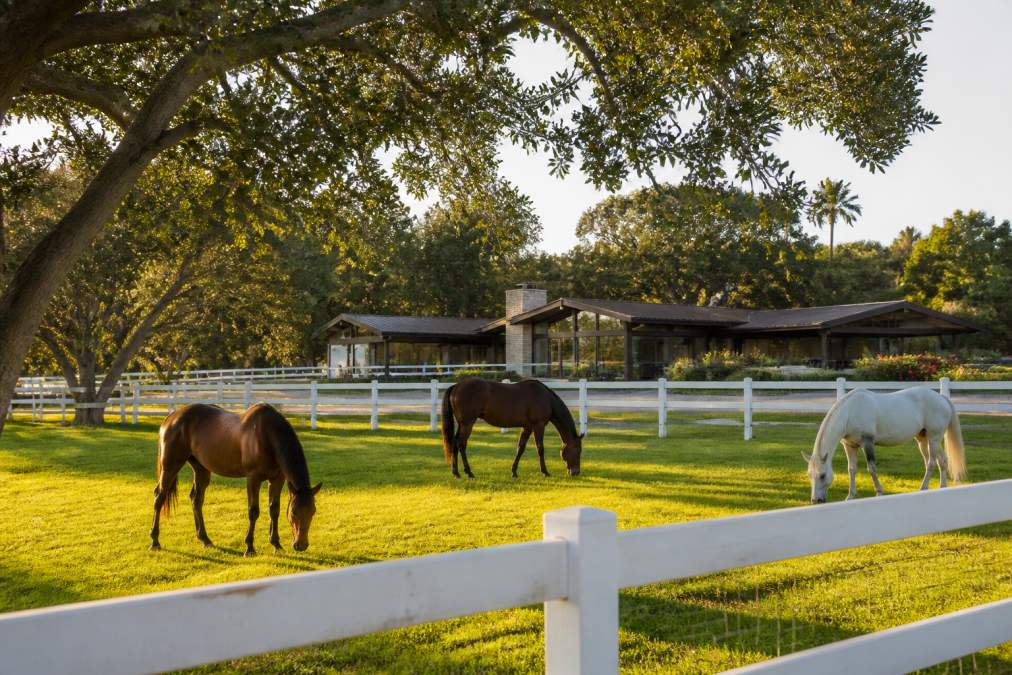
Before making an offer on any Rancho property, request a copy of the CC&Rs (covenants, conditions, and restrictions) and review them carefully. Some HOAs limit the number of horses, mandate specific fencing types, or require approval for pasture improvements. These details matter far more than square footage if you’re buying for equestrian purposes.
Ranch-Style Architecture and Lot Size Considerations
The Rancho District’s housing stock is dominated by mid-century ranch-style homes built primarily between 1950 and 1975. These homes feature low-pitched roofs, open floor plans, horizontal lines, and direct access to outdoor living spaces. This architectural style aligns naturally with the equestrian lifestyle.
Lot size directly impacts property value and usability. A 0.75-acre property may legally support a horse but offers limited pasture and minimal separation between the home and neighbors. A 1.5-2 acre parcel provides genuine pasture space, room for multiple horses, and better privacy. When evaluating lot size, consider the actual usable space and soil composition, as clay-heavy lots drain poorly while sandy or well-draining soil supports better pasture.
What Sets the Rancho District Apart
The Rancho District’s identity rests on three pillars: equestrian zoning, community cohesion, and proximity to major recreational areas.
Neighborhood Amenities and Proximity to Equestrian Centers
The Los Angeles Equestrian Center sits directly adjacent to the Rancho District, offering riding trails, boarding facilities, lessons, and community events. Rancho residents enjoy immediate access to these facilities.
Griffith Park, one of Los Angeles’s largest public parks, borders the Rancho District to the east, offering 53 miles of hiking and equestrian trails. Many Rancho residents take advantage of trail access for horseback riding and hiking.
The neighborhood offers good walkability for a suburban area. Nearby Magnolia Park provides community gathering space. The Rancho area is served by Burbank Unified School District. Buyers should confirm the assigned schools for a specific address with the district.
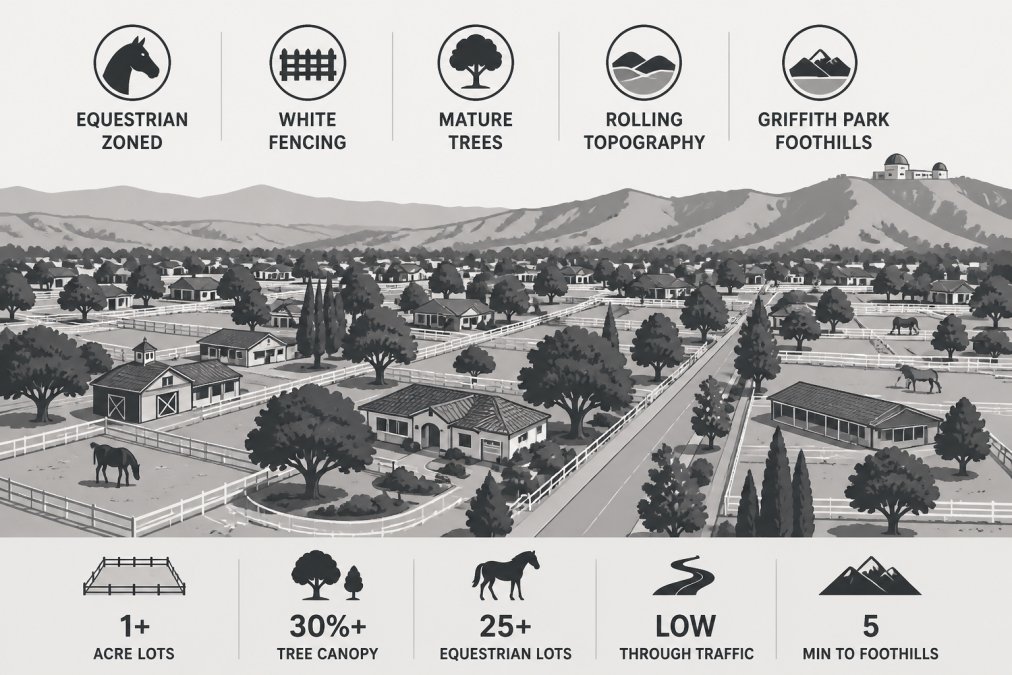
Retail and dining options center around nearby commercial corridors on Magnolia Boulevard and Olive Avenue, rather than within the residential Rancho area itself. This separation maintains the neighborhood’s residential character but requires driving for shopping and dining.
School District and Community Walkability
The Rancho area is served by Burbank Unified School District elementary, middle, and high schools. Buyers should verify which schools serve a specific address with the district. School ratings through independent sources like California Department of Education provide performance data.
Community walkability in Rancho is moderate. The neighborhood is primarily car-dependent for accessing shopping, dining, and services. However, within the residential area itself, tree-lined streets and lower traffic volumes make for pleasant local walks.
The community is tight-knit. Neighbors often know one another, and informal networks share information about local contractors, equestrian resources, and neighborhood issues. Newcomers may take time to integrate into established networks, but those who do find genuine community support.
Buying a House in Burbank CA: Essential Tips and Process
Purchasing a home in Burbank Rancho requires understanding both standard real estate processes and neighborhood-specific considerations.
Understanding Property Disclosures and Comparative Market Analysis
California law requires sellers to provide comprehensive property disclosures before a buyer commits to purchase. In Rancho, these disclosures must clearly identify equestrian zoning, any HOA restrictions, and specific property conditions. Review these documents carefully, they reveal past issues, repairs, and restrictions that affect your decision.
A comparative market analysis (CMA) examines recent sales of similar properties in the neighborhood to establish realistic pricing. In Rancho’s small market, a proper CMA typically includes 3-5 comparable sales from the past 3-6 months. Will Flannigan Real Estate builds CMAs grounded in deep knowledge of which properties actually sold, at what price, and under what conditions. This matters in Rancho more than in larger markets, where aggregate data can obscure local realities.
Mortgage Interest Rates, Closing Costs, and Home Equity
Mortgage interest rates in 2026 continue to fluctuate based on broader economic conditions. A 0.5% difference in rate on a $1.5M loan translates to roughly $500-$700 per month. Shop multiple lenders and understand whether you’re comparing fixed or adjustable rates.
Closing costs typically range from 2-5% of the purchase price and include appraisal fees, title insurance, escrow fees, and lender charges. In a $1.5M purchase, closing costs might run $30,000-$75,000.
Home equity builds as you pay down your mortgage and as property values appreciate. In Rancho’s appreciation environment, equity accumulates through both mechanisms.
Working With a Local Real Estate Expert
The difference between working with a local expert and a transactional agent becomes most apparent in a market like Rancho. A true local knows which properties are overpriced, understands neighborhood dynamics that affect value, and has relationships that lead to off-market opportunities.
Will Flannigan Real Estate’s nearly 20-year residency in the Rancho neighborhood provides exactly this advantage. As a former attorney, Will brings fiduciary thinking to negotiations, your interests come first. This matters particularly in trust and probate sales, where families are already stressed and need guidance they can trust.
New Construction and Recent Listings in Rancho Burbank
New construction in the Rancho District is rare. The neighborhood’s established character, mature trees, and stable community discourage large-scale development. Most "new" homes in Rancho are actually renovations of existing mid-century properties.
Recent renovation trends favor preserving the original architectural character while updating systems, kitchens, and bathrooms. Homes that successfully blend mid-century aesthetics with modern amenities command premium pricing. A few new builds have appeared on larger lots, typically incorporating contemporary design within a ranch-style footprint while maintaining compatibility with neighborhood character.
Historical Preservation vs. Modern Renovation in the Rancho
The tension between preserving mid-century character and modernizing for current living standards defines many Rancho purchase decisions. This affects market value, buyer appeal, and long-term enjoyment.
Properties that preserve original architectural details appeal to buyers who value authenticity and history. These homes command premium pricing if the original elements are in good condition. However, preservation constrains updates.
Extensively renovated homes appeal to buyers who prioritize function and current aesthetics. A fully updated kitchen, modern bathrooms, and reconfigured spaces increase usability but may reduce historical appeal. The key is balance: updating systems and finishes while respecting the home’s architectural bones.
Committing to either direction before purchase prevents costly mistakes. Buyers seeking original character should expect and budget for system updates. Buyers prioritizing modern function should understand they’re choosing contemporary over historical and price accordingly.
Commuter Logistics and Traffic Patterns From Rancho Burbank
The Rancho District’s location offers reasonable access to major employment centers, though commute times vary significantly by destination and time of day.
To downtown Los Angeles via the 134 freeway: 25-40 minutes depending on traffic and time of day. Morning rush hour (7-9 AM) and evening rush hour (4-7 PM) create significant delays.
To the San Fernando Valley: 10-20 minutes to most Valley destinations. The Rancho District’s position on Burbank’s eastern edge provides relatively quick access westbound.
To Santa Monica and the Westside: 35-50 minutes via the 134 to the 10. This is a significant commute and should be factored into daily life decisions.
Local traffic within the Rancho District itself is light. Streets are tree-lined and quiet, with low through-traffic. Most Rancho residents rely on personal vehicles, as public transportation options are limited.
Consider your workplace location and commute tolerance before purchasing. A 45-minute commute becomes 90 minutes daily, that’s significant life impact. However, the neighborhood’s character and lifestyle may justify the trade-off for some buyers.
Purchasing a home in Burbank Rancho requires understanding both the neighborhood’s unique character and the practical realities of the current market. The combination of equestrian zoning, mid-century architecture, and strong community identity creates a distinctive living environment. Local expertise matters more here than in typical suburban markets. Will Flannigan Real Estate brings exactly that expertise: nearly two decades of neighborhood residency, fiduciary-focused guidance from an attorney’s perspective, and deep relationships throughout the Rancho community. Whether you’re buying, selling, or navigating a complex trust or probate sale, working with someone who knows this neighborhood intimately protects your interests and ensures you’re making decisions based on accurate, local market knowledge. Get started with Will Flannigan Real Estate and discover what your Burbank Rancho home is worth today.
Frequently Asked Questions
What makes the Rancho District in Burbank a desirable place to live?
The Rancho District offers a unique blend of equestrian lifestyle and suburban convenience. Properties are zoned for horses (R1H zoning), with access to the Los Angeles Equestrian Center and Griffith Park trails. The neighborhood features mid-century modern ranch-style homes on larger lots and an active neighborhood community. Residents enjoy both the rural aesthetic and proximity to Burbank's employment centers and cultural amenities.
Are there equestrian-zoned properties in the Burbank Rancho neighborhood?
Yes. The Rancho District is specifically zoned for equestrian use (R1H zoning), allowing horses on residential properties. This zoning is one of the defining features of the neighborhood. Properties typically include pasture land, stables, and riding areas. If you're considering a horse property, verify the specific zoning and any homeowners association restrictions during your comparative market analysis and property disclosures review.
What is the current price trend for homes in the Burbank Rancho area for 2026?
The Burbank Rancho market in 2026 reflects broader Southern California real estate dynamics. Median listing prices vary by lot size, square footage, and property condition. Mid-century modern ranch-style homes typically command higher prices per square foot due to their architectural appeal and lot sizes. Days on market have stabilized, and appreciation rates remain steady. For current pricing data specific to active inventory and recent sales, consult the MLS or speak with a local real estate expert familiar with Rancho market trends.
What should I know about buying a house in Burbank CA?
When buying in Burbank, understand property tax assessments, mortgage interest rates, and closing costs upfront. Request full property disclosures and review past sales history through comparative market analysis. Factor in escrow timelines and home equity implications. Work with an agent who understands local zoning, especially if you're interested in equestrian properties. Having a fiduciary-focused advisor familiar with Burbank's unique neighborhoods, like the Rancho, helps avoid overpaying and ensures a smooth transaction.
How does equestrian zoning affect property value and usage rights in Rancho Burbank?
R1H equestrian zoning allows residential properties to accommodate horses, which significantly impacts property value, lot layout, and usage rights. Zoned properties typically require minimum lot sizes and may have specific regulations for stable structures and pasture maintenance. This zoning attracts horse owners willing to pay premiums for the lifestyle amenity. When evaluating equestrian properties, verify zoning compliance, homeowners association rules, and any restrictions on the number or type of animals allowed.