
Table of Contents
- Understanding Luxury Property Market Trends
- What Defines a Luxury Property in Your Market
- Analyzing Luxury Home Pricing Through Comparable Sales
- Luxury Home Pricing Analysis: Beyond the List Price
- Luxury Home Days on Market and Negotiation Use
- Building Your Luxury Home Buyer Checklist
- Making Your Final Decision with Confidence
- Frequently Asked Questions
Last Updated: October 14, 2026
Understanding Luxury Property Market Trends
Evaluating luxury property market trends means understanding your local market right now, not what headlines claim is happening everywhere.
At Will Flannigan Real Estate, we work with buyers across Burbank, Glendale, Pasadena, and surrounding communities.
The real question isn’t “Is now a good time to buy?” It’s “What does my specific market look like today, and how do I position myself to win?”
The biggest mistake luxury buyers make is treating their local market like a national one. Your Burbank neighborhood has its own supply, its own buyer pool, and its own price dynamics. National trends are noise.
What Defines a Luxury Property in Your Market
A luxury property commands premium pricing because of specific, measurable qualities selective buyers seek.
In the Burbank Rancho area and similar neighborhoods, luxury properties typically feature:
- Architectural uniqueness, homes with distinctive design, custom finishes, or historical significance
- Premium location, properties on desirable streets, with views, or in established affluent neighborhoods
- High-quality materials, natural stone, hardwood, imported fixtures, and superior construction standards
The key insight: luxury isn’t about the price tag. It’s about what justifies the price tag.
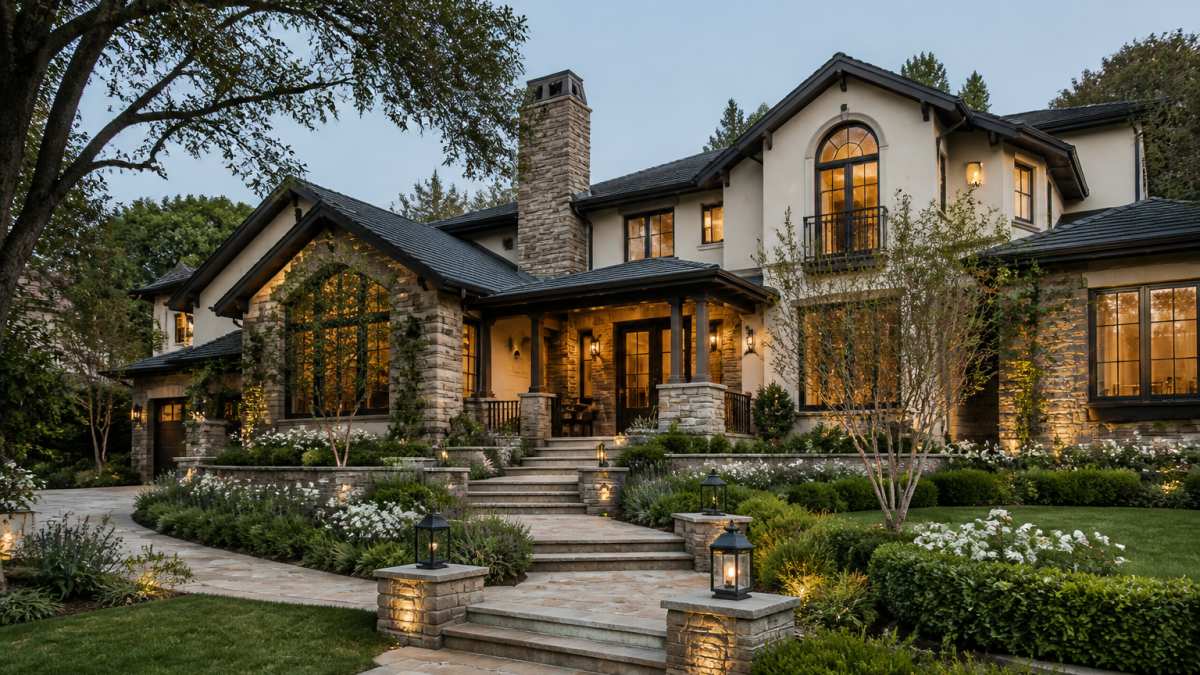
Many buyers confuse “expensive” with “luxury.” A 10,000-square-foot house in a mediocre location isn’t luxury; a 3,500-square-foot home with exceptional architecture and premium positioning is. Evaluating luxury property market trends means recognizing which properties hold value and which are overpriced.
Luxury properties sell on specificity, not size. The most valuable homes solve a specific buyer’s problem or match their exact vision, not the builder’s vision.
Analyzing Luxury Home Pricing Through Comparable Sales
Comparable sales analysis is your foundation for understanding value. It’s how you know if a $2.5 million home is priced right or inflated.
A comparable sale (or “comp”) is a recent sale of a similar property in your area.
When evaluating luxury property market trends through comps, focus on:
- Recent sales only, properties that closed in the last 60-90 days
- Similar size and condition, homes within 1,000 square feet and comparable quality
- Same neighborhood or adjacent ones, Burbank Rancho comps matter more than Glendale comps, but nearby areas inform the broader picture
Luxury comp analysis isn’t exact. A $50,000 difference in a $2 million sale is noise; a $200,000 variance signals hidden value or overpricing.
Avoid the trap of “averaging” three comps to find your price. Three recent sales of similar luxury homes rarely exist. Instead, weight the most recent and most similar comp most heavily. If only one comp truly matches, that one comp is your anchor.
Luxury Home Pricing Analysis: Beyond the List Price
List price is a starting point, not a prediction.
When evaluating luxury property market trends, track these pricing signals:
- List-to-sale ratio, if homes are selling at 95% of list, the market favors buyers; at 105%+, it favors sellers
- Price reductions, homes that drop price after 30 days are signaling weakness; homes that hold or increase price show strength
- Time on market, how long homes sit before selling (we’ll cover this next)
- Absorption rate, how many months of inventory exist at current sales velocity
A luxury home priced at $2.4 million might list at $2.6 million, not greed, but strategy: testing the market, leaving negotiation room, anchoring expectations high.
Homes that sell fastest are priced 5-10% below market and attract multiple offers. Homes at or above market take longer; those 10%+ above often sit or get reduced.
Reading the Signals in Burbank, Glendale, and Pasadena
A single list-to-sale ratio hides more than it reveals. What matters is the ratio within a price band and neighborhood. A 98% ratio across all of Burbank tells you little if the $3M+ tier in the hills sells at 92% while the $1.5M tier near the studios sells at 101%. Pull the ratio for your specific band and streets.
Three patterns show up repeatedly in Los Angeles County luxury submarkets:
- The stale-listing discount. A home that has been on the market 60+ days and has already reduced once is usually the best-priced home on the street. The seller has already absorbed the market’s feedback. Buyers who wait for a second reduction often lose the home to someone who moved at the first one.
- The aspirational anchor. A newly listed home priced 15% above every recent comp is not a signal that values jumped. It is a signal that the seller is testing. Track it. If it sells near ask, the market has moved. If it reduces in 45 days, it confirms your comps were right.
- The quiet premium. In San Marino and La Cañada, homes on certain streets or within certain school boundaries routinely sell above the comps that look identical on paper. Location premiums in these areas are real and persistent, and they do not show up in a citywide average.
Absorption Rate: The Number Most Buyers Ignore
Absorption rate is the clearest single indicator of a buyer’s or seller’s market, active listings divided by sales per month in that same price band and area.
- Under 3 months of inventory, seller’s market. Expect competition, fewer contingencies, and little room to negotiate.
- 4 to 6 months, balanced. Standard negotiation, normal contingencies.
- Over 6 months, buyer’s market. You have leverage on price, terms, and repairs.
In luxury tiers, absorption rates run higher than the citywide figure because the buyer pool is thinner. A neighborhood showing 2 months of inventory at $1.5M may show 9 months at $4M. Use the upper-tier rate, not the headline number.
Ask for the absorption rate in your exact price band and your exact neighborhood, not the citywide figure. A citywide number blends a fast $1.2M segment with a slow $5M segment and tells you nothing useful about either.
Luxury Home Days on Market and Negotiation Use
Days on market (DOM) is one of the clearest signals in evaluating luxury property market trends, it tells you who has leverage.
A luxury home selling in 14 days is in high demand, the buyer had little leverage.
Here’s how to read the signal:
| Market Condition | Days on Market | Buyer Position | Negotiation Strategy |
|---|---|---|---|
| Strong seller’s market | 7-21 days | Weak | Offer quickly, fewer contingencies |
| Balanced market | 30-60 days | Neutral | Standard offer, reasonable terms |
| Buyer’s market | 90+ days | Strong | Make lower offer, add contingencies |
When evaluating luxury property market trends, DOM reveals whether you’re in competitive bidding (favors the seller) or negotiation (favors the buyer).
A home listed 45 days ago at $2.2 million with no offers means the price is too high or the home has issues.
Why the Citywide DOM Number Misleads You
The DOM figure on a listing site usually blends every price tier. In Burbank, Glendale, and Pasadena, the $1M-$2M segment moves quickly because the buyer pool is deep.
A practical rule: pull DOM for your specific price band and your specific streets. If the citywide DOM is 30 days but your band is running 75, you are in a slower market than the headline suggests, and you should negotiate accordingly.
Relist Behavior: The Signal Most Buyers Miss
In luxury tiers, a “new” listing may not be new. Sellers and agents routinely withdraw a stale listing and relist it to reset the DOM counter.
Before you treat a low DOM as a sign of demand, check the price history. If the home has been listed, withdrawn, and relisted, treat it as a long-DOM property and negotiate from that position.
Seasonal Patterns in Los Angeles County
Luxury activity in Los Angeles County follows a rhythm. Spring and early summer bring the deepest buyer pool and fastest sales. Late summer and fall see fewer showings and more price reductions, especially in the hills and where school calendars drive moves.
If you are shopping in a slower season, you often have more leverage than the DOM number alone suggests, because the sellers who are still listed in a slow season are usually motivated.
In luxury markets, a home sitting 60+ days is often a better value than one that sold in 14 days, even if the sitting home costs slightly more. You’re buying at a price the market actually supports, not at an inflated peak.
DOM is not a single number, it is a distribution by price band, a history that can be reset by relisting, and a seasonal pattern. Read all three before you decide how much leverage you have.
Building Your Luxury Home Buyer Checklist
Before you make an offer, create a checklist. This keeps emotion out of the decision and ensures you’re evaluating luxury property market trends against your actual needs.
Your checklist should include:
- Financial readiness, down payment, financing pre-approval, proof of funds
- Property inspection, structural, mechanical, electrical, plumbing, roof
- Market analysis, comparable sales, days on market, price trends for this neighborhood
- Title and legal, clear title, no liens, HOA status (if applicable), any easements
The last point matters more than many buyers realize. A stunning custom home that appeals to one specific buyer might be nearly impossible to resell.
When evaluating luxury property market trends, ask: “Am I buying this home for me, or as an investment?” The answer changes your checklist, a primary residence can be more unique; an investment property should be more mainstream.
Making Your Final Decision with Confidence
Evaluating luxury property market trends comes down to three questions:
-
Is this property priced right for today’s market? Use comps. Compare DOM. Check list-to-sale ratios. If the price feels high relative to recent sales, it probably is.
-
Does this home solve my problem? If you need privacy, a busy street kills the deal. If you need walkability, a remote property doesn’t work. Emotion matters, but it should align with your actual lifestyle.
-
Can I afford this long-term? Not just the purchase price, the property taxes, insurance, maintenance, utilities, and pool service. Luxury homes cost more to maintain.
When you’re ready to move forward, working with someone who understands your local market makes the difference.
The luxury property market rewards informed buyers and punishes rushed ones. Understand your specific neighborhood, compare recent sales, analyze days on market, build your checklist, then move with confidence.
Ready to evaluate your options? Will Flannigan Real Estate can provide a personalized market analysis tailored to your specific neighborhood and budget.
Frequently Asked Questions
How do I know if a luxury property is overpriced in my local market?
Compare the asking price against recent comparable sales of similar properties in the same neighborhood. Look at homes that sold within the last 3-6 months with similar square footage, lot size, and key features. Check the days on market for those comparables, if they sold quickly, the market supports the price. If comparable homes sold for significantly less, or sat on the market longer, the property may be overpriced. A qualified local advisor can pull detailed comparable sales data to show you exactly how a property stacks up.
What luxury real estate comparable sales data should I review before making an offer?
Request comparable sales for homes that closed in the last 90 days within your target neighborhood. Focus on properties with similar size, condition, lot characteristics, and amenities. Look at the original list price versus the final sale price to understand negotiation patterns. Compare price per square foot across comparables to spot outliers. Ask your real estate advisor to explain why certain homes sold higher or lower, architectural uniqueness, smart-home features, privacy factors, and location within the neighborhood all affect value. This data forms the foundation of a realistic offer strategy.
How do luxury home days on market affect my negotiating position?
A property that has been on the market for 60+ days signals less demand and gives you stronger negotiating leverage. Homes that sell within 14-21 days typically indicate strong buyer interest and a seller’s market where you may need to offer closer to asking price. Days on market also reflects pricing accuracy, if a luxury home is priced correctly for the market, it usually sells faster. Use this metric alongside comparable sales data to determine a realistic offer range and timing strategy.
What should be on my luxury home buyer checklist before closing?
Your checklist should include a professional home inspection by someone experienced with high-value properties, a full appraisal to verify the property’s value, title search and insurance review, verification of all smart-home systems and warranties, review of HOA documents and fees if applicable, environmental and geological reports if relevant to your area, and a final walk-through to confirm all agreed-upon repairs were completed. For luxury properties, also verify the condition and functionality of specialty features like pools, wine cellars, or security systems. Have your attorney or advisor review all disclosures carefully before you sign.