
Last Updated: October 23, 2026
Quick Summary
Executor responsibilities for maintaining vacant property include securing the home, conducting monthly inspections, arranging proper insurance coverage, addressing urgent repairs, and managing utilities and bills. The executor must protect the estate’s assets by preventing theft, weather damage, and deterioration while documenting all actions taken.
- Change all locks immediately and install motion-sensor lighting and security system signs to deter break-ins
- Inspect the property monthly for 30 to 60 minutes, checking for water damage, pests, broken windows, and utility function
- Notify the insurance carrier in writing within the first week of vacancy and obtain a vacant property endorsement before the 30-day vacancy clause takes effect
- Keep electricity active to power security systems and HVAC, but shut off water at the main unless irrigation or pools require it
- Document every inspection, repair, utility decision, and insurance communication in a maintenance file to prove fiduciary duty compliance
Table of Contents
- Understanding Your Role as Executor of Estate Property
- How to Secure a Vacant House During Probate
- Create an Executor Property Maintenance Checklist
- Securing Vacant Home Insurance During Probate
- Executor Responsibility for Home Repairs and Damage Prevention
- Managing Utilities and Property Bills
- Documentation and Communication With Beneficiaries
- Frequently Asked Questions
Understanding Your Role as Executor of Estate Property
Most executors stumble here: they focus on paperwork and legal deadlines but overlook the physical protection of the home itself, an oversight that can cost thousands in damage, liability claims, or lost value by the time the estate settles.
At Will Flannigan Real Estate, we’ve guided executors through this exact challenge across the greater Los Angeles area.
Your core responsibility is straightforward: protect the estate’s assets by securing the home, maintaining it, preventing damage, and documenting everything.
How to Secure a Vacant House During Probate
A vacant home is vulnerable. Without active occupancy, it attracts break-ins, squatters, and opportunistic theft. Security isn’t optional, it’s a fiduciary duty.
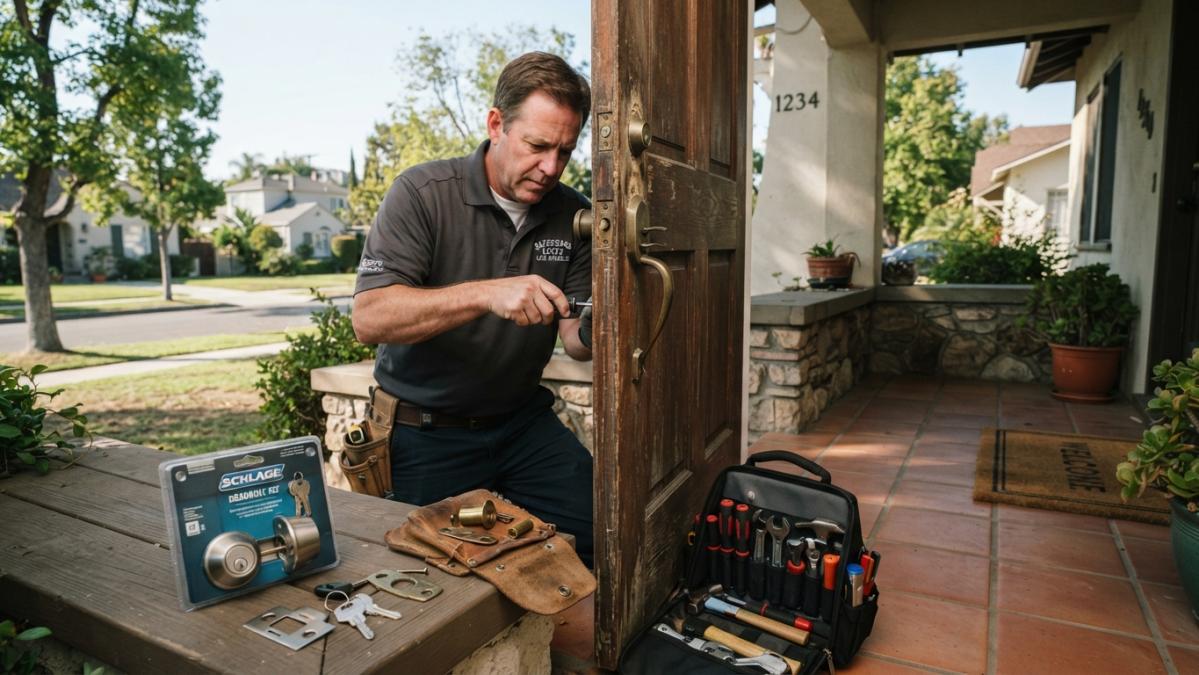
Change Locks and Control Access
The first step is absolute: change every lock on the property. Anyone with a key, contractors, previous tenants, neighbors, now has access to an estate asset. That’s unacceptable.
Replace locks on:
- Front and rear exterior doors
- Garage entry doors
- Basement or crawl space access
Keep one master key set in a secure location and document who has keys and why. Issue contractors a key with clear access protocols, and revoke access when their work ends.
Skipping this step invites liability and loss.
Install Security Measures
Beyond locks, add visible deterrents:
- Motion-sensor outdoor lighting on all sides of the house signals active management
- Security system signs in the yard deter casual break-ins
- Window coverings prevent visibility into an empty home
For higher-value properties or those vacant for months, add a basic motion-recording camera system, no professional monitoring needed, just evidence if theft or damage occurs.
Create an Executor Property Maintenance Checklist
A vacant home deteriorates faster than an occupied one because no one is there to catch leaks, notice pest activity, or spot broken windows. Create a written checklist and assign someone, you, a property manager, or a trusted family member, to inspect on a schedule.
Monthly Property Inspection Tasks
Visit the property at least once a month, 30 to 60 minutes per visit. During each inspection:
- Walk the exterior perimeter and check for broken windows, damaged siding, or signs of entry
- Look for water damage on ceilings, walls, or floors inside
- Confirm all doors and windows are locked and secure
Address any problem, a roof leak, broken pipe, cracked foundation, immediately. Small leaks become major water damage within weeks.
Seasonal and Weather-Related Maintenance
Adjust your maintenance schedule to the season.
Summer: inspect for water damage or mold, confirm air conditioning is functioning, monitor pest activity, and check exterior paint and caulking.
Document each seasonal check, this record demonstrates you fulfilled your fiduciary duty to protect the estate.
An executor should inspect the property monthly and adjust maintenance tasks by season to prevent deterioration.
| Season | Key Maintenance Tasks | Frequency |
|---|---|---|
| Fall and early winter | Clear gutters, trim branches, drain faucets, shut off irrigation | Before winter |
| Winter | Maintain minimum heat, monitor for water intrusion | Monthly inspections |
| Spring | Check thaw damage, inspect foundation, test sump pumps | After storms |
| Summer | Inspect for mold, confirm air conditioning, monitor pests | Monthly inspections |
| All seasons | Walk perimeter, check locks, test utilities, remove debris | Monthly, 30-60 minutes |
Securing Vacant Home Insurance During Probate
Standard homeowner’s policies are underwritten for occupied homes. Once a property sits empty, the vacancy clause can reduce or eliminate coverage, often after 30 consecutive days, though the exact threshold is set by the policy form. The executor’s job is to close that gap before a loss occurs.
Notify the Insurer in Writing, Immediately
Call the estate’s insurance agent the week you take authority, then follow up in writing, carriers often treat verbal notice as insufficient, and a dated email or letter creates the record you’ll need if a claim is disputed. State the date the home became vacant and why (probate administration), who holds keys, your inspection schedule, and any security measures installed.
Understand What a Vacancy Endorsement Actually Does
A vacant property endorsement modifies the existing policy to restore coverages the vacancy clause would otherwise suspend, commonly theft, vandalism, and glass breakage. It typically carries a higher premium and may impose conditions such as weekly or biweekly inspections with a written log, required security measures like deadbolt locks or alarm systems, minimum heat to prevent freezing, and immediate notification of any change in occupancy or damage.
Coverage Limits and Exclusions to Confirm
Ask the agent to walk through these line items:
- Dwelling coverage, confirm the limit reflects current replacement cost
- Liability limits, vacant properties carry elevated slip-and-fall and attractive-nuisance exposure; check whether the estate’s umbrella coverage extends
- Water damage and mold, many policies cap or exclude mold remediation after prolonged leaks, exactly the risk a vacant home presents
Inspection and Documentation Requirements
Insurers increasingly require documented inspections as a condition of vacant-property coverage. Build a file with dated photos of the exterior, interior, and security measures; a signed inspection log noting who visited, what was checked, and any findings; receipts for repairs and maintenance; and copies of all insurer correspondence and endorsements.
Do not let the policy lapse while you shop for a vacant-property endorsement. A gap in coverage, even a few days, can leave the estate uninsured for a loss that occurs during the gap, and reinstating coverage after a lapse often triggers new underwriting and higher premiums.
When the Standard Policy Cannot Be Endorsed
Some carriers won’t endorse a homeowner’s policy for vacancy at all and will non-renew at the next term. In that case, the executor needs a standalone vacant-property policy, written on a different form with its own exclusions and inspection conditions. Start the search as soon as the insurer signals non-renewal, waiting until the cancellation date forces a rushed decision and possibly a lapse.
Executor Responsibility for Home Repairs and Damage Prevention
Not every problem requires immediate repair. But some do. Knowing the difference is critical.
Addressing Urgent Repairs
Some damage threatens structural integrity or safety and requires immediate action:
- Active water leaks from roofs, pipes, or foundation, water damage accelerates rapidly
- Broken windows or doors, these compromise security and allow weather intrusion
- Heating system failure in winter, frozen pipes can cause catastrophic damage
For urgent repairs, get at least two estimates, choose a licensed, insured contractor, pay from estate funds, and document with photos, invoices, and written descriptions. Non-urgent repairs, cosmetic damage, minor roof wear, peeling paint, can wait for the sale or transfer. Your job is to preserve value, not restore it to perfect condition.
Hiring and Supervising Contractors
Hire carefully: get written estimates, check references, and verify licensing and insurance. Create a written scope of work before any contractor starts, covering the specific work, materials, timeline, payment terms, and warranty. Require proof of liability insurance before work begins. Supervise the work, visit during and after to confirm it meets scope, and don’t pay the final invoice until you’ve inspected it.
Managing Utilities and Property Bills
A vacant home still consumes utilities, and the executor’s decisions about which services to keep active, and at what settings, affect both the property’s condition and the estate’s expenses.
Decide Service by Service, Not as a Block
Treat each utility as a separate decision:
- Electricity, generally keep active. It powers security systems, exterior lighting, sump pumps, and the HVAC system. Shutting it off disables the very systems protecting the home.
- Water, keep active if the home has irrigation, a pool, or appliances needing water; otherwise shut off at the main and drain lines. A slow leak in an empty house can run for weeks before discovery.
- Natural gas, keep active only if the heating system or water heater requires it. Have the utility perform any shutoff and document it; a DIY shutoff that leaves an appliance unsafe creates liability.
Set HVAC to Protect, Not to Comfort
In a vacant home, the HVAC system’s job is damage prevention, not comfort. Keep the interior at a minimum temperature that prevents pipe freezing in winter and a maximum that limits humidity and mold growth in summer; confirm setpoints against the home’s insulation and the insurer’s conditions. Smart thermostats let you verify settings remotely and adjust after a weather event without a site visit.
Watch the Bills as a Diagnostic Tool
Utility bills are one of the best early-warning systems an executor has. A spike in water usage can signal a running toilet, slab leak, or broken irrigation line; an unexplained jump in electricity can indicate a failing HVAC compressor or a space heater left running. Review every bill monthly against the prior month and the same month last year, and investigate anomalies immediately.
Automate Payments From Estate Funds
Set up automatic payment from the estate’s checking account for every recurring bill: utilities, property taxes, insurance premiums, and any mortgage or HOA dues. Missed payments create liens, late fees, and shutoffs far more expensive to resolve than the bill itself. Keep the account funded and reconcile payments against statements monthly.
If the estate’s bank requires a new account for estate administration, open it early and move the automatic payments before the next billing cycle. A payment that fails because the old account was closed can trigger a shutoff notice that takes weeks to reverse.
Property Taxes and Assessments
Property tax bills continue regardless of occupancy, and delinquency leads to penalties and eventually a tax sale. Confirm bill status with the county tax collector, verify any installment plan or exemption, and pay from estate funds on schedule. The same discipline applies to HOA dues and special assessments, unpaid balances can result in liens that complicate the sale or transfer.
Document Every Utility Decision
For each service, record the decision, date, reason, and supporting documentation (shutoff confirmations, account numbers, setpoint changes). This supports the estate’s accounting to beneficiaries and shows the insurer and the court that the executor made deliberate, documented choices rather than letting services lapse by inattention.
Documentation and Communication With Beneficiaries
Beneficiaries want to know the property is being cared for, and transparency protects you from disputes later.
For complex probate situations or high-value properties, learn how to prepare a probate home for sale to understand the full process of preparing the property for disposition. If you’re unsure about specific maintenance issues, get a detailed inspection guide specifically for probate properties to support your maintenance checklist and identify hidden problems. And if you’ll eventually be moving into the inherited home yourself, understand what to check before you move into an inherited home so you know what deferred maintenance and safety issues to identify during your inspections.
Maintaining a vacant property through probate is demanding but non-negotiable. Every month of neglect costs money in repairs, risk, and lost value. Secure the property, establish a maintenance routine, arrange proper insurance, and document everything.
If you’re navigating probate in the greater Los Angeles area and need guidance on protecting estate property, connect with a Trust & Probate Specialist who understands both the legal requirements and the practical realities of property management during estate settlement.
Frequently Asked Questions
What should an executor do to secure a vacant property?
Start by changing all locks and obtaining copies for authorized parties. Install motion-sensor lighting, security cameras, and consider an alarm system if the property will be vacant for an extended period. Board up windows or install security film if the home is at high risk. Notify local law enforcement of the vacancy and arrange periodic property checks. Document all security measures taken and maintain records for the estate.
How often should an executor check on a vacant house?
Conduct a thorough inspection at least monthly, with more frequent visits (weekly or biweekly) during winter months or adverse weather seasons. After storms or extreme weather, check immediately for damage. Each visit should include checking for water leaks, pests, broken windows, and signs of unauthorized entry. Document findings with photos and notes. The frequency may increase if the property shows signs of deterioration or if local conditions require more attention.
Can an executor hire someone to maintain a vacant property?
Yes. Executors can hire property managers, contractors, or maintenance services to oversee a vacant estate property. Before hiring, obtain written quotes and verify licensing and insurance. Document all agreements in writing and ensure the contractor understands they are working on behalf of the estate. Keep receipts and invoices for all work performed. Supervise the work periodically and communicate findings to beneficiaries. Costs for reasonable maintenance are typically paid from estate funds and may be deducted as estate expenses.
What happens if an executor fails to maintain estate property?
Neglecting property maintenance can result in significant liability for the executor. Damage from weather, pests, or theft may reduce the estate’s value and the inheritance beneficiaries receive. Beneficiaries can challenge the executor’s conduct through probate court, potentially surcharging the executor (requiring them to pay for losses from personal funds). Additionally, an unmaintained property may violate local codes, resulting in fines or enforcement action against the estate. Courts take fiduciary duty seriously, so proper maintenance protects both the estate and the executor’s legal standing.
