
Last Updated: October 24, 2026
Quick Summary
San Marino luxury home market trends in 2026 show pricing that has held roughly flat to modestly higher, with the strongest activity in the middle of the luxury range. Inventory remains thin, so well-prepared homes priced correctly still sell near asking while overpriced listings go stale fast.
- Entry luxury homes face the highest buyer competition and the least negotiating room.
- Upper luxury buyers negotiate more widely and are quicker to walk away over single issues.
- Days on market has stretched versus the broader county, but one stale listing can skew it.
- New luxury listings arrive in clusters, often spring and early fall, before scarcity returns.
- Sellers should price to property type, not the citywide median, and document any premium.
Table of Contents
- San Marino Luxury Home Market Trends 2026: The Big Picture
- San Marino Luxury Home Prices: Where Values Stand
- San Marino Luxury Home Inventory and Sales Activity
- Neighborhood-Level Analysis: Where Demand Concentrates
- How the 2026 San Marino Luxury Market Compares Regionally
- Selling a Luxury Home in San Marino: Strategy and Timing
- Building a 2026 Forecast You Can Actually Trust
- What’s Your San Marino Home Worth in 2026?
- Frequently Asked Questions
San Marino Luxury Home Market Trends 2026: The Big Picture
San Marino luxury home market trends in 2026 point to one clear story: a small, supply-constrained city where pricing power belongs to sellers who price correctly and wait.
San Marino is not a volume market.
What matters is the local pattern: luxury pricing has held steady rather than surged, demand has become more selective, and the gap between well-prepared and rushed homes has widened.
San Marino Luxury Home Prices: Where Values Stand
San Marino luxury home prices have held roughly flat to modestly higher in 2026, with the strongest activity in the middle of the luxury range rather than at the very top.
One caveat: San Marino’s volume is small enough that a single large estate sale can move the median.
For a deeper look at how to analyze pricing and avoid overpaying, see our luxury home buying strategy guide.
Price Bands and What They Buy
The luxury market here splits into distinct bands, and each behaves differently. Buyers shopping the entry luxury tier face the most competition; buyers at the top of the market negotiate more and wait longer.
| Price Band | Typical Property | Buyer Competition | Negotiating Room |
|---|---|---|---|
| Entry luxury | Updated single-family home, smaller lot, often a recent renovation | Highest | Limited |
| Mid luxury | Larger lot, pool, renovated interior, move-in ready | Moderate | Moderate |
| Upper luxury | Estate-scale lot, original or custom build, may need updates | Lowest | Widest |
| Trophy tier | Landmark property, exceptional lot size, architectural pedigree | Very low | Case by case |
The practical takeaway: the entry band moves fastest, and the top of the market rewards patience. Entry-band buyers compete against families relocating for schools and space, so turnkey homes priced defensibly see multiple offers.
Why Property Type Changes the Price Story
Broad averages obscure more than they reveal here because the housing stock is unusually varied. Three property types dominate the luxury segment, and each prices differently:
- Historic and original-condition homes. These often carry larger lots and mature landscaping but may need systems upgrades, seismic work, or cosmetic renovation. Buyers price in the cost and hassle of that work, which can widen negotiating room even when the list price looks aggressive.
- Renovated and turnkey homes. These attract the broadest buyer pool because they require no immediate capital outlay. They tend to sell closest to list and fastest, but only when the renovation quality matches the price premium being asked.
- Newer construction and custom builds. These are scarce in San Marino and command a premium when they appear, but the buyer pool is narrower because the price point is higher and the aesthetic is fixed. Custom finishes that appeal to one buyer can limit the pool for the next.
A common pattern: sellers of original-condition homes price against renovated comps and then sit. The reverse, pricing a renovated home against original-condition comps, leaves money on the table. Matching the comp to the property type is the most important pricing step in this market.
When you review comps, sort by condition and lot size before you sort by price. A same-street sale with a different condition profile is not a true comparable, even if the square footage matches.
What This Means for Buyers and Sellers
Buyers should expect the entry band to move quickly and be ready to act on turnkey homes priced in line with renovated comps. In the upper bands, buyers have leverage, request inspection reports, ask for repair credits, and negotiate on timeline as well as price. Sellers should price to their property type, not the citywide median, and document the value story behind any premium.
San Marino Luxury Home Inventory and Sales Activity
San Marino luxury home inventory remains thin, and that scarcity is the single biggest force in the market. Active listings stay low relative to demand, new listings arrive in small batches, and few owners need to move.
Thin inventory cuts both ways: sellers face less direct competition, while buyers get fewer choices, which is why appraisal risk becomes real in a market with few comparable sales. Our guide to luxury home appraisal challenges for buyers explains how thin comps can derail a purchase.
The Metrics That Actually Matter in a Thin Market
In a market this small, the headline inventory count tells you less than the transaction-level details. Here are the metrics we track for luxury sellers and buyers, and why each one matters:
- Days on market. Days on market in San Marino’s luxury segment has stretched compared with the broader county, which surprises sellers who expect a fast sale. But a long days-on-market figure often reflects a small number of listings, each priced ambitiously at launch, rather than weak demand. The median can be skewed by one or two stale listings.
- Sale-to-list ratio. The sale-to-list price ratio tells the real story: well-priced homes still close near or at asking, while overpriced listings sit, then take a price reduction. A citywide average ratio hides the split between homes that sold quickly at list and homes that lingered and cut price.
- Price reductions. Tracking how many listings have taken a reduction, and how large the cut was, is a better demand signal than raw days on market. A cluster of reductions in one price band usually signals that sellers there mispriced at launch.
Do not read a long days-on-market figure as proof of weak demand. In a city with only a few luxury listings at a time, one overpriced home can drag the average for months. Look at the distribution, not the average.
How Inventory Moves Through the Year
Inventory follows a seasonal pattern more pronounced than in larger markets because the absolute numbers are so small. New luxury listings arrive in clusters, often spring and early fall, and the market can feel suddenly competitive for a few weeks before returning to scarcity.
Buyers should watch new-listing alerts and be ready to move on homes that fit, because waiting for ‘more inventory’ here often means waiting for the next cluster.
What This Means for Your Strategy
For buyers, treat scarcity as a planning constraint: get pre-approved or proof-of-funds ready, know your must-haves, and act quickly on well-priced homes. For sellers, preparation and accurate launch pricing matter more here than in markets where volume absorbs mistakes. An overpriced launch in a thin market goes stale fast, and buyers read long days-on-market as a signal, even when the real issue was the launch price.
Neighborhood-Level Analysis: Where Demand Concentrates
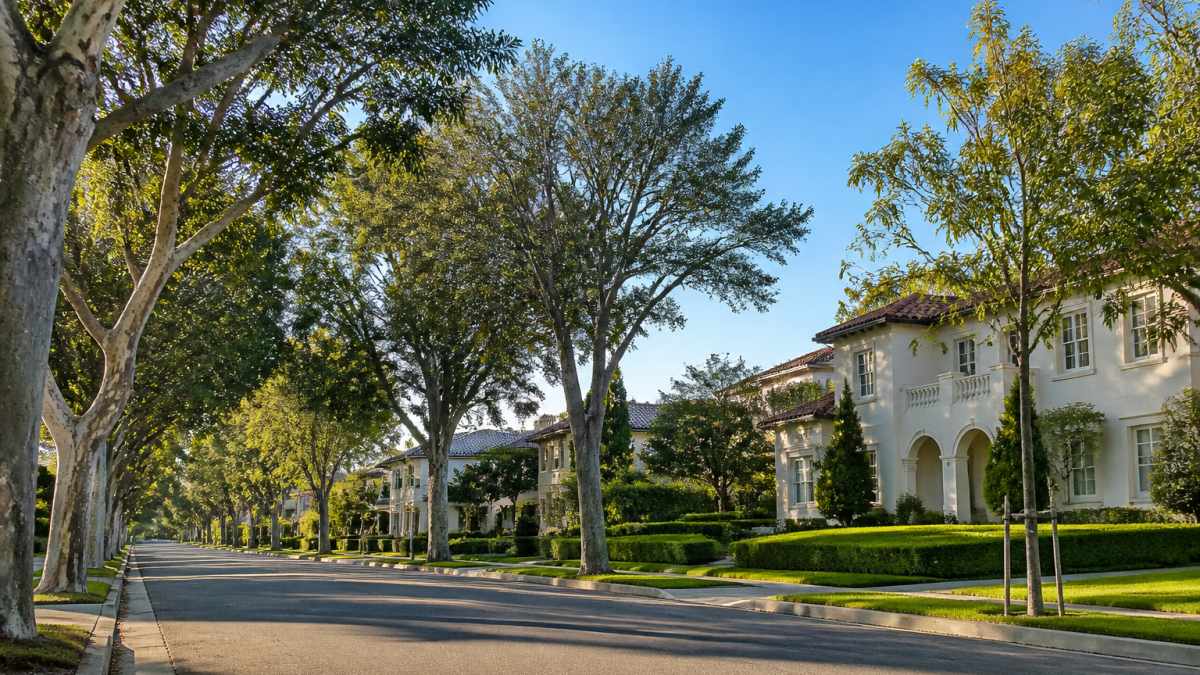
Demand in San Marino concentrates block by block, not citywide. Streets near the better-known estate sections and quieter interior blocks draw the most consistent interest, while homes on busier edges sit longer.
Buyers relocating from out of state often ask how local knowledge helps. For street-by-street detail, our neighborhood guides for Burbank, Glendale, Pasadena, San Marino and the Hollywood Hills cover home styles, prices, and schools.
How the 2026 San Marino Luxury Market Compares Regionally
Compared with the wider Los Angeles County market, San Marino’s luxury segment looks quieter and more stable.
Mortgage rates and affordability shape buyer behavior across the region, and even cash-heavy luxury buyers respond at the margins.
That last point matters. A meaningful slice of San Marino sales involves estates, trusts, and probate, where timelines and court requirements shape the transaction.
Selling a Luxury Home in San Marino: Strategy and Timing
Selling a luxury home in San Marino rewards preparation over speed. The sellers who do best price accurately at launch, invest in staging, and choose timing that avoids a wave of similar listings.
Here is the approach we recommend:
- Pull recent comparable sales, not just active listings
- Separate renovated comps from original-condition comps
- Set a launch price you can defend with data
- Stage the home for its likely buyer
Watch out: the most common mistake is launching high to “leave room” and then chasing the market down.
For sellers weighing the full process, our guide to selling luxury homes in San Marino covers pricing, staging, and legal considerations.
Building a 2026 Forecast You Can Actually Trust
Most market forecasts fail because they mix observed data with wishful projection. A trustworthy forecast separates what happened from what might happen and states its assumptions clearly.
Use this method:
- Start with closed sales, not asking prices.
- Compare year-over-year change in both price and volume.
- Track active listings and new listings monthly.
- Note days on market and sale-to-list ratios as confirmation.
- Label every projection as a projection, with its assumptions.
The 2026 outlook for San Marino luxury homes is best described as stabilization with selective demand: firm pricing where homes are prepared and correctly priced, and slower movement where they are not. For broader context on California housing conditions, see California Association of Realtors housing market data and Federal Reserve Economic Data on mortgage rates.
What’s Your San Marino Home Worth in 2026?
A home’s value here depends on lot, condition, street, and timing, not a citywide average. If you own in San Marino and want a realistic number, the fastest path is a data-driven valuation rather than a guess.
I provide a free, honest assessment of your home’s current market value, with no pressure and no obligation to sell. Request your home valuation to see where your property stands in 2026.
Frequently Asked Questions
Is 2026 a good time to buy a luxury home in San Marino?
It depends on your timeline and financing. San Marino luxury home prices have held steadier than many surrounding markets, and inventory remains limited, so well-priced homes still draw competition. Buyers with financing in place and flexibility on close dates have more room to negotiate on homes that have sat longer. Review current San Marino luxury home prices and inventory with a local advisor before making an offer, and factor in ownership costs like property taxes and maintenance.
How long are luxury homes taking to sell in San Marino?
Days on market varies by price band and property type. Entry-level luxury homes in the lower price bands tend to move faster when priced correctly, while higher-end estates often sit longer because the buyer pool is smaller. Sale-to-list price ratios and price reduction activity are the best indicators of current momentum. Ask for a property-specific absorption analysis rather than relying on a single citywide average.
What features are buyers looking for in San Marino luxury homes?
Buyers in San Marino consistently prioritize lot size, privacy, mature landscaping, and proximity to top-rated schools. Updated kitchens and primary suites matter, but so does the condition of systems like roofing, plumbing, and HVAC, which affect ownership costs. Homes with flexible floor plans and space for multi-generational living also draw attention from local and international buyers, including Mandarin-speaking families.
How does San Marino’s luxury housing market compare with nearby communities?
San Marino tends to see steadier price holding than larger markets like Pasadena or Glendale because its housing stock is limited and turnover is low. That scarcity supports values but also means fewer listings at any given time. Nearby communities offer more inventory and different price points, so comparing regional market conditions side by side helps buyers understand what they are paying for in San Marino specifically.
San Marino’s luxury market rewards sellers who price with evidence and buyers who understand scarcity. If you are weighing a sale, I bring nearly 20 years as a Burbank Rancho resident, deep knowledge of San Marino and the surrounding cities, trust and probate expertise, and Mandarin-speaking service to the table. Get started with me and get a clear, honest read on your home’s value.
